
- Product
- Solution for
For Your Industry
- Plans & Pricing
- About us
- Resources

For Your Industry
How Pricing Intelligence Increases Gross Margin is not simply a marketing question. It is a financial lever with direct impact on operating profit.
A one percent improvement in average selling price often generates more profit than a ten percent increase in volume. Yet most companies invest more in acquisition than in pricing precision.
Gross margin is fragile. It erodes quietly through:
Reactive discounting
Delayed competitor monitoring
Misjudged elasticity
Manual pricing processes
Poor SKU segmentation
Pricing intelligence introduces structured visibility. That visibility turns pricing from reactive activity into controlled margin management.
When price decisions are informed by accurate external data, gross margin becomes measurable and defendable.
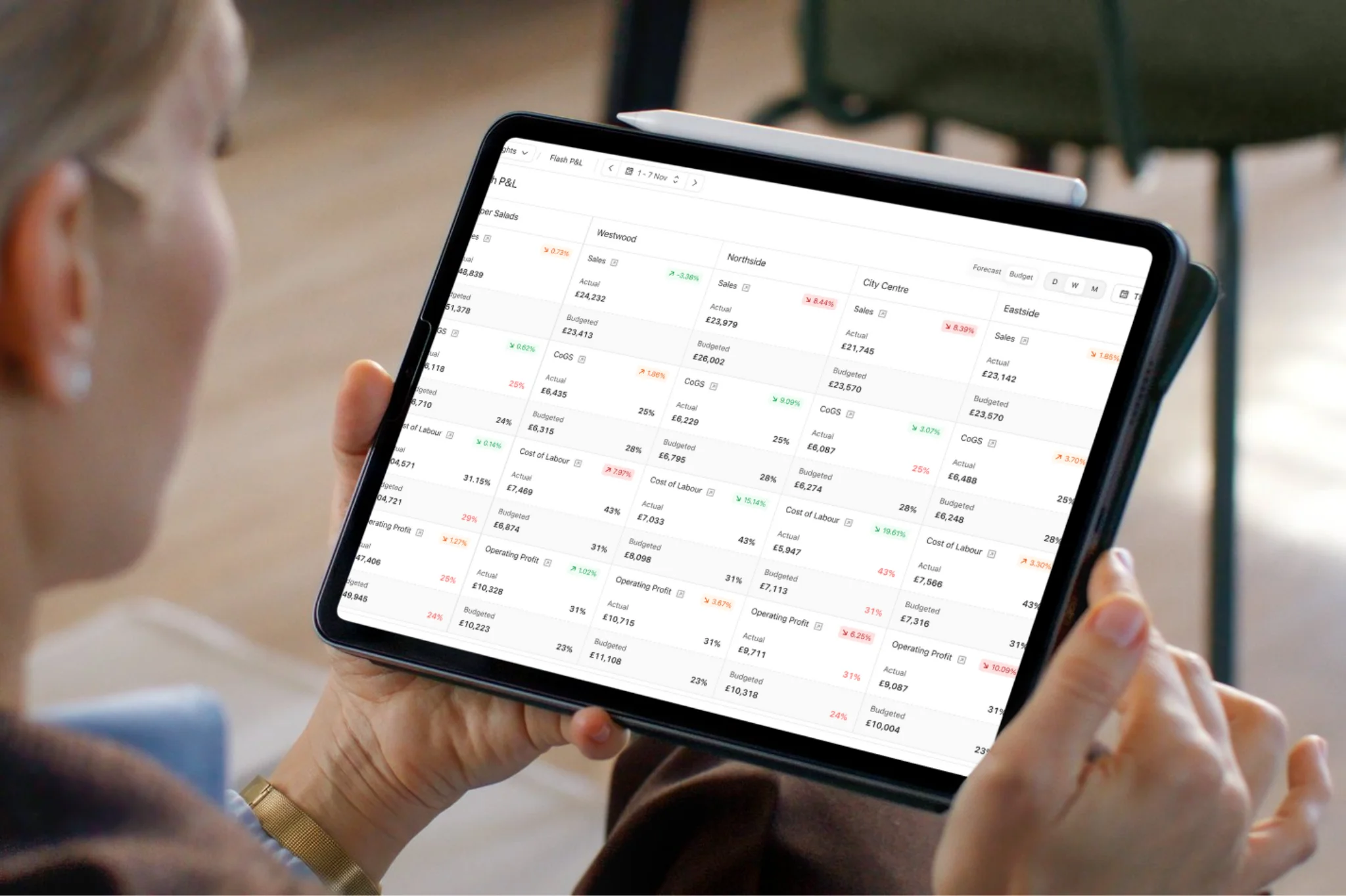
Pricing intelligence increases gross margin by improving average selling price, reducing unnecessary discounting, and aligning pricing with demand elasticity. Because price directly affects contribution per unit, even small data-driven adjustments can produce disproportionate profit improvements across high-volume portfolios.
Gross margin formula:
Revenue minus Cost of Goods Sold equals Gross Margin.
Price affects revenue directly. Cost is often fixed or slow-moving. This asymmetry makes pricing one of the most powerful profit levers.
Assume:
Product cost: 70
Selling price: 100
Gross margin: 30 percent
Increase price by 3 percent to 103.
New margin:
103 minus 70 equals 33
Gross margin becomes 32 percent
That 3 percent price lift results in a 10 percent increase in gross profit per unit.
Now scale that across 50,000 units monthly.
Without pricing intelligence, companies hesitate to test that increase.
With competitive validation and elasticity insight, that increase becomes measurable and controlled.
Finance teams understand pricing power.
Operational teams lack real time data to exercise it safely.
Pricing intelligence closes that gap.
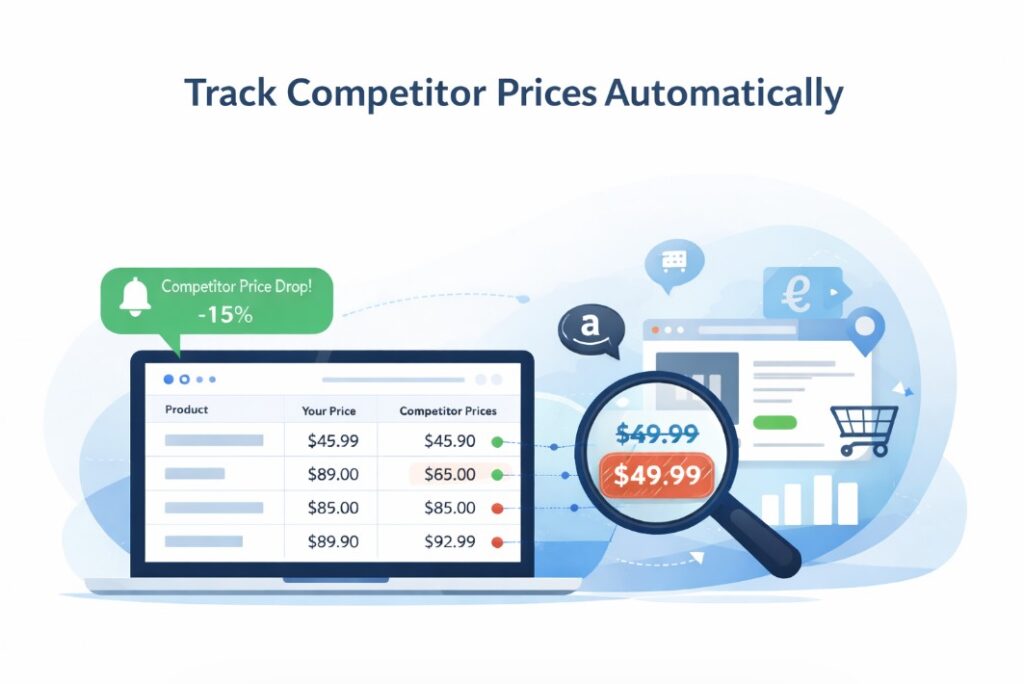
Competitive price monitoring prevents gross margin erosion by identifying when competitors change pricing, run promotions, or exit discount periods. Real time alerts allow companies to respond strategically instead of reactively, preserving margin and avoiding unnecessary price reductions.
Margin leakage is rarely dramatic. It is cumulative.
A competitor launches a short term promotion. Your team matches it. The competitor reverts to full price. Your team does not notice.
Days turn into weeks. Margin slowly erodes.
Situation:
A retailer manages 8,000 SKUs with weekly manual competitor checks.
What breaks without monitoring:
Promotions stay active too long. High-demand products are underpriced. Bundles lose premium positioning.
What changes with structured intelligence:
Real-time alerts flag competitor reversion. Prices are adjusted within hours. Only exposed SKUs are matched.
Strategic takeaway:
Monitoring frequency determines margin protection speed.
Platforms such as tgndata act as continuous validation layers, ensuring that competitive shifts are detected automatically rather than manually.
If 15 percent of SKUs experience small price mismatches monthly, margin erosion compounds across quarters.
Pricing intelligence converts hidden leakage into visible opportunity.
Understanding price elasticity allows businesses to increase prices selectively without reducing demand. Pricing intelligence reveals which SKUs are insensitive to moderate price increases, enabling gross margin expansion while maintaining volume stability.
Elasticity is rarely uniform.
High elasticity categories:
Commoditized electronics
Highly substitutable consumer goods
Low elasticity categories:
Specialized industrial parts
Unique branded products
Time sensitive accessories
Situation:
An industrial parts supplier assumed customers were highly price sensitive.
What breaks:
Blanket discounts reduce margin unnecessarily.
What changes with elasticity insight:
Analysis shows proprietary components have low substitution risk. Prices increase by 4 percent. Volume remains stable.
Strategic takeaway:
Elasticity must be measured at the SKU level, not assumed at category level.
Pricing intelligence supports:
A B testing price corridors
Monitoring competitor gap tolerance
Conversion tracking against price variance
Margin improvement emerges from measured experimentation, not aggressive hikes.
Pricing intelligence improves promotional effectiveness by aligning discounts with competitive pressure and demand cycles. This prevents habitual discounting, stabilizes average selling price, and protects gross margin from unnecessary promotional erosion.
Many organizations treat promotions as revenue accelerators.
They often become margin destroyers.
A home goods retailer runs quarterly sales events automatically.
Without competitor visibility:
Discounts overlap with competitor full price periods
Customers anchor to lower price expectations
Full price conversion declines
With structured competitive tracking:
Promotions activate only during competitor campaigns
Full price windows are protected
Discount depth becomes tactical rather than habitual
Situation:
Heavy reliance on flash sales drove top-line growth.
What breaks:
Gross margin declined from 48 percent to 41 percent in one year.
What changes:
Competitive analysis shows competitors reducing discount frequency. Brand shifts to limited category promotions.
Strategic takeaway:
Discount timing should follow data signals, not calendar tradition.
Margin stability improves when promotions are disciplined by intelligence.
SKU level pricing intelligence increases gross margin by identifying underpriced high demand products and over discounted low performing items. Portfolio wide analysis enables precision pricing decisions that compound across large catalogs.
Category averages hide margin distortion.
Portfolio variance is often extreme.
Definition: Category margin target equals 35 percent.
Reality: Some SKUs operate at 20 percent, others at 50 percent.
Without SKU visibility, cross subsidy occurs silently.
Situation:
Uniform markup rule applied across catalog.
What breaks:
Top selling accessories underpriced relative to competitor gap. Slow movers require markdown cycles.
What changes:
Pricing intelligence surfaces:
Top quartile demand SKUs
Persistent competitor price gaps above 5 percent
Chronic markdown traps
Strategic takeaway:
Margin optimization lives at micro level.
Even small corrections across high velocity SKUs generate disproportionate profit uplift.
Pricing intelligence increases gross margin in both B2B and B2C environments, but through different mechanisms. B2C focuses on real time competitive visibility, while B2B emphasizes discount governance, contract discipline, and segmentation analysis.
Transparent pricing
High competitive monitoring frequency
Dynamic repricing environments
Margin improvement comes from reaction speed and elasticity validation.
Negotiated discounts
Long term contracts
Sales driven pricing discretion
Sustainable gross margin improvement requires governance and automation. Pricing intelligence systems enforce rules, automate alerts, and ensure pricing consistency, preventing drift and preserving long term margin gains.
Short term improvements disappear without structure.
Defined price corridors
Approval workflows for discount exceptions
Margin guardrails
Automated reversion rules
Cause: Manual price updates across thousands of SKUs.
Effect: Inconsistent application of pricing rules.
Scale: Quarterly margin volatility.
When pricing intelligence integrates with ERP and ecommerce systems, updates become systematic.
tgndata supports this layer by validating competitor inputs continuously, ensuring that governance decisions rest on accurate data.
Pricing discipline compounds over time.
Pricing intelligence increases gross margin sustainably by transforming pricing from reactive activity into controlled infrastructure. When competitive data, elasticity insight, and governance automation align, margin gains compound across portfolios and fiscal quarters.
Gross margin improvement is rarely about one dramatic change.
It is about:
Hundreds of small pricing corrections
Timely promotional reversions
Selective price increases
Controlled discounting
Structured governance
When pricing intelligence becomes embedded into operations, pricing evolves from periodic review to continuous optimization.
Organizations that treat pricing as infrastructure outperform those treating it as periodic adjustment.
To identify margin leakage and pricing opportunities within your portfolio, begin with a structured competitive pricing audit and gross margin diagnostic. tgndata supports pricing leaders by providing validated monitoring and operational pricing intelligence systems that protect profitability at scale.
Controlled precision consistently wins.
Margin improvements can appear within weeks if clear underpricing or discount leakage exists. Immediate competitor monitoring often reveals quick correction opportunities. Long term gains typically emerge over one to two quarters as governance systems and elasticity insights become embedded in pricing workflows.
No. Often the biggest gains come from preventing unnecessary price reductions or reverting expired promotions. Selective price increases based on low elasticity insights contribute to margin growth, but discipline and control matter more than aggressive pricing.
Yes. Even businesses with fewer SKUs benefit from competitive visibility and elasticity insight. A small portfolio with high sales concentration can experience significant gross margin improvement through precise pricing adjustments.
Margin leakage commonly results from delayed competitor monitoring, prolonged discounting, blanket promotions, manual pricing updates, and inconsistent governance. Without structured pricing intelligence, these small errors compound into measurable profit erosion.
Pricing analytics often focuses on internal historical data. Pricing intelligence combines internal analytics with external competitive monitoring and market signals. This broader view supports real time decision making that directly impacts gross margin.
Yes. Monitoring competitor prices supports detection of MAP violations and unauthorized discounting. This visibility protects brand integrity and prevents margin erosion caused by uncontrolled channel pricing behavior.
Typical improvements include increased gross margin percentage, higher contribution margin per SKU, improved average selling price, reduced promotional expense, and more consistent discount governance across sales teams.





We use cookies to provide you with an optimal experience, for marketing and statistical purposes only with your consent, which you may revoke at any time. Please refer to our Privacy Policy for more information.
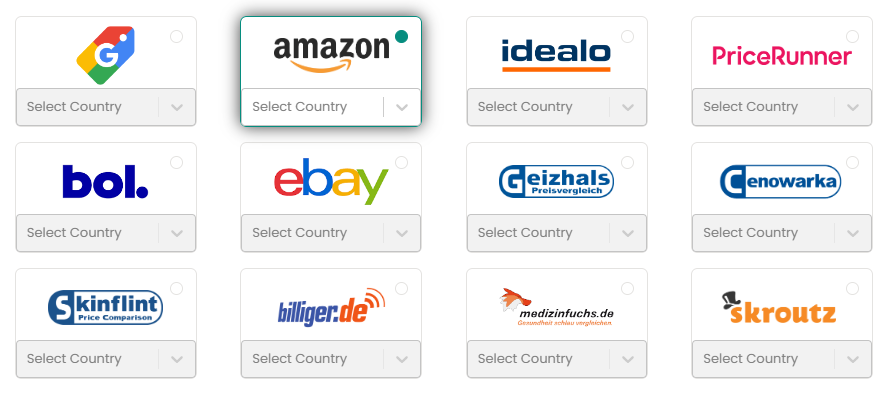










Missing an important marketplace?
Send us your request to add it!