
- Product
- Solution for
For Your Industry
- Plans & Pricing
- About us
- Resources

For Your Industry
Margin protection eCommerce strategies are no longer optional in today’s volatile market environment. Profitability is being reshaped by constant shifts in costs, from logistics and sourcing to advertising and platform fees. While revenue may appear stable, margins are often eroding silently due to delayed pricing decisions and outdated systems.
A slight increase in freight rates.
A supplier adjusting unit costs by a few percentage points.
A gradual rise in paid acquisition costs.
Individually, these shifts appear manageable. Operational noise. Temporary fluctuations.
But together, they create a structural imbalance between cost and price. And that imbalance is where margins disappear.
The core issue is not volatility itself. Volatility is now constant. It is the baseline condition of global commerce.
The real issue is that most eCommerce pricing systems are not designed to respond to it.
Pricing is still treated as a periodic decision. Updated weekly, sometimes monthly, often manually. Meanwhile, cost structures evolve daily, sometimes hourly. This creates a lag between reality and response.
That lag is expensive.
By the time a pricing team reacts, margin loss has already been realized across hundreds or thousands of orders. And because revenue often remains stable, the problem goes unnoticed until profitability is already compromised.
This is why margin protection is no longer a pricing tactic. It is an operational discipline.
It requires:
Continuous cost visibility
Demand-sensitive pricing decisions
Automated execution across channels
In other words, it requires a system.
This playbook breaks down how modern eCommerce brands build that system. Not through theory, but through practical frameworks, real-world use cases, and operational strategies that align pricing with reality as it changes.

Cost volatility has permanently changed eCommerce by making pricing a continuous process rather than a periodic decision. Fluctuations in shipping, sourcing, and advertising costs require real-time adjustments. Brands that fail to adapt quickly experience margin erosion, while those with responsive pricing systems maintain profitability despite constant change.
For years, eCommerce operated under a relatively stable cost structure.
Shipping rates fluctuated, but within predictable ranges. Supplier costs changed, but often annually. Advertising costs increased, but gradually.
That environment allowed for:
Fixed pricing strategies
Long planning cycles
Predictable margin modeling
That environment no longer exists.
Today, cost volatility is structural.
1. Logistics Became Dynamic
Shipping routes, fuel costs, and carrier pricing now shift frequently. Delivery timelines are less predictable, and costs vary significantly by region and time.
2. Supplier Pricing Became Reactive
Manufacturers adjust pricing faster due to their own cost pressures. Raw material fluctuations cascade into product pricing with minimal delay.
3. Advertising Became Auction-Driven
Retail media and paid acquisition channels operate on real-time bidding systems. CAC can increase dramatically within days.
4. Channel Fees Continue to Rise
Marketplaces continuously adjust fee structures, often reducing margins without immediate visibility.
Margins are no longer determined at the start of a quarter.
They are determined continuously.
This creates a new requirement:
Profitability depends on synchronization between cost changes and pricing actions.
Situation:
A consumer electronics brand sells across Shopify, Amazon, and Walmart Marketplace.
What breaks without adaptation:
Shipping costs increase for international orders
Marketplace fees adjust slightly
Paid ads become more expensive
Prices remain unchanged for 30 days.
Result:
Revenue remains stable
Profit margins drop by 12 percent
What changes with real-time systems:
Prices adjust per channel
Shipping cost increases are partially passed through
High-margin SKUs absorb cost shocks
Strategic takeaway:
Volatility does not reduce demand. It reduces margin if unmanaged.
Margin leakage refers to the gradual loss of profitability due to small inefficiencies such as delayed pricing updates, unnecessary discounts, and rising costs. It often goes unnoticed because revenue remains stable, but over time it significantly reduces profit margins and operational efficiency.
Margin loss is rarely dramatic.
It is incremental.
And that is what makes it dangerous.
Prices remain static while costs increase
Discounts are applied without strategic intent
Competitor prices drop, forcing reactive adjustments
High-performing SKUs are underpriced unnecessarily
Each of these contributes small losses.
Together, they create significant erosion.
Revenue masks the problem.
If sales volume remains strong, teams assume performance is healthy.
But revenue is not profit.
Situation:
A DTC apparel brand experiences strong sales growth.
What breaks:
Increased return rates
Rising fulfillment costs
Static pricing across collections
Outcome:
Revenue increases by 15 percent.
Profit decreases by 6 percent.
After implementing pricing intelligence via tgndata:
Underpriced SKUs identified
Discount strategy optimized
Prices adjusted based on demand
Result:
Margin recovery without impacting sales volume.
Margin leakage is not a finance issue. It is a visibility issue.
Dynamic pricing allows eCommerce brands to adjust prices in real time based on costs, demand, and competition. This helps maintain profitability during volatility by ensuring prices reflect current market conditions, preventing margin erosion while staying competitive.
Dynamic pricing is often misunderstood. It is not about constantly changing prices. It is about aligning prices with reality.
1. Cost-Based Adjustments
Prices respond to changes in:
Supplier costs
Shipping rates
Operational expenses
2. Market-Based Adjustments
Prices align with:
Competitor positioning
Marketplace dynamics
3. Demand-Based Adjustments
Prices reflect:
Elasticity
Conversion behavior
Seasonal demand
Situation:
A furniture brand experiences increased logistics costs.
What breaks with static pricing:
Margins drop on bulky items.
With dynamic pricing:
Prices increase selectively on low-elasticity products
Bundles introduced to maintain perceived value
Outcome:
Margins stabilize without reducing conversion.
Dynamic pricing is not optional. It is infrastructure.
Price elasticity at scale involves analyzing how different products respond to price changes across categories, channels, and customer segments. Instead of treating all products equally, brands use data to segment SKUs and apply targeted pricing strategies that maximize both conversion and margin.
Most brands understand elasticity conceptually.
Few operationalize it.
The common mistake is treating elasticity as:
A one-time analysis
A category-level assumption
A static metric
In reality, elasticity is dynamic and granular.
Elasticity varies across:
SKU level
Channel level
Customer segment
Time period
The same product can behave differently:
On Amazon vs Shopify
During peak vs off-season
With paid traffic vs organic
Instead of labeling products as “elastic” or “inelastic,” leading teams segment into:
1. Margin Expansion SKUs
Low elasticity
High demand stability
Opportunity for price increases
2. Traffic Driver SKUs
High elasticity
Used to attract customers
Price-sensitive
3. Competitive Anchor SKUs
Directly compared with competitors
Require tight price positioning
4. Long-Tail SKUs
Low visibility
Often under-optimized
Hidden margin opportunity
Situation:
A brand sells 2,000+ SKUs across marketplaces.
What breaks without segmentation:
Uniform pricing changes
Over-discounting competitive SKUs
Underpricing niche products
After elasticity segmentation:
Prices increased on long-tail SKUs
Competitive SKUs aligned with market
Traffic drivers kept stable
Outcome:
Margin increased by 9 percent
Conversion rate unchanged
Elasticity is not a constraint. It is a lever.
Multi-channel pricing conflicts occur when the same product is priced differently across platforms, leading to margin distortion and customer confusion. Brands must synchronize pricing across channels while accounting for different fees, competition, and customer behavior to maintain profitability.
Selling across multiple channels creates complexity.
Each channel has:
Different fees
Different competition
Different customer expectations
A product priced correctly on Shopify can be:
Overpriced on Amazon
Underpriced on Walmart
This leads to:
Margin loss on some channels
Lost sales on others
Leading brands move away from uniform pricing.
Instead, they apply:
Channel-adjusted pricing
Fee-aware margin calculations
Competitive benchmarking per platform
Situation:
A beauty brand sells on:
Shopify
Amazon
TikTok Shop
What breaks:
Same price across all channels
Ignored fee differences
Outcome:
Amazon margins significantly lower
TikTok conversions weak due to price positioning
With tgndata-powered monitoring:
Prices optimized per channel
Fees incorporated into pricing logic
Result:
Margin parity across channels
Improved conversion rates
There is no single “correct” price. Only channel-appropriate pricing.
Retail media impacts margins by increasing customer acquisition costs and influencing product visibility. Brands must account for advertising spend within pricing strategies to ensure profitability, as visibility often depends on paid placements rather than organic ranking.
Retail media has changed the economics of visibility.
You are no longer just pricing products.
You are pricing:
Product + acquisition cost
Traditional:
Revenue – COGS = Margin
Now:
Revenue – (COGS + CAC) = True Margin
To win visibility:
You spend more on ads
To maintain margin:
You increase price
But increasing price can reduce conversion.
This creates a loop.
Situation:
A seller increases ad spend to maintain rankings.
What breaks:
CAC rises
Margins shrink
Without pricing adjustment:
Profitability declines rapidly.
With integrated pricing + ad data:
Prices increased slightly
Ad spend optimized
Outcome:
Balanced visibility and margin.
Retail media is not a marketing problem. It is a pricing problem.
Pricing automation enables brands to update prices continuously based on real-time data such as costs, competition, and demand. This reduces delays, improves consistency, and ensures pricing decisions align with current market conditions, protecting margins effectively.
Manual pricing cannot keep up with volatility.
The volume is too high:
Thousands of SKUs
Multiple channels
Constant cost changes
Speed of updates
Consistency across channels
Reduction of human error
Data ingestion
Rule or algorithm engine
Execution layer
Monitoring and alerts
Situation:
10,000+ SKUs, manual pricing updates weekly.
What breaks:
Delayed reactions
Inconsistent pricing
After automation via tgndata:
Daily price updates
Alert-driven adjustments
Outcome:
Margin stabilization
Operational efficiency improved
Automation is not about efficiency. It is about survival speed.
Financial modeling helps eCommerce brands predict how cost changes, pricing decisions, and demand shifts will impact margins. By simulating different scenarios, brands can proactively adjust pricing strategies to maintain profitability under uncertain conditions.
Reactive pricing is not enough.
Leading brands forecast.
Cost increase scenarios
Demand sensitivity
Competitor reactions
Channel performance
If:
Shipping increases by 15 percent
Conversion drops by 5 percent
What happens to margin?
Without modeling, decisions are reactive.
Situation:
Facing rising logistics costs.
What breaks:
Uncertainty in pricing decisions
With forecasting:
Simulated price increases
Measured impact on conversion
Outcome:
Confident pricing adjustments.
Forecasting reduces fear in pricing decisions.
Needs real-time data
Struggles with delayed updates
Gains control through automation
Balances revenue and margin
Uses dashboards for decision-making
Aligns pricing with acquisition costs
Avoids overpaying for traffic
Manages cost inputs
Feeds data into pricing systems
Margin protection is cross-functional. Not owned by one team.
Without a margin protection system, eCommerce brands face delayed pricing decisions, inconsistent margins, and reduced profitability. Costs rise faster than prices adjust, leading to silent margin erosion that often goes unnoticed until financial performance declines significantly.
Without a system:
Decisions are delayed
Data is fragmented
Margins erode silently
Small inefficiencies scale across:
SKUs
Orders
Channels
The biggest risk is not volatility. It is operating without a system designed for it.
Margin protection in eCommerce refers to strategies and systems that ensure profitability despite changing costs. It involves dynamic pricing, cost monitoring, and competitor tracking to maintain the gap between revenue and total expenses, even in volatile market conditions.
Brands protect margins by using real-time pricing adjustments, monitoring cost changes, and analyzing competitor pricing. Instead of static pricing, they adopt dynamic systems that align prices with current costs and demand, preventing profit erosion while maintaining competitiveness.
Dynamic pricing allows brands to respond quickly to cost changes, demand shifts, and competitor movements. Without it, prices remain outdated, leading to margin loss. It ensures pricing reflects real-time conditions, helping brands stay profitable without sacrificing conversion rates.
Margin erosion is caused by delayed pricing updates, rising costs, unnecessary discounts, and lack of competitive visibility. These factors gradually reduce profitability over time, often without immediate detection, making it one of the biggest hidden risks in eCommerce.
In volatile environments, pricing should be monitored daily and adjusted as needed. Automated pricing systems enable continuous updates, ensuring that prices remain aligned with costs, demand, and competition, which is essential for protecting margins.
Margin protection is no longer optional.
It is not a tactic, a project, or a quarterly initiative.
It is a continuous system.
The brands that win are not those with the lowest costs.
They are the ones that:
See changes first
React fastest
Execute consistently
tgndata operates as the validation and execution layer that enables this shift, transforming fragmented signals into actionable pricing decisions.
In a volatile environment, profitability is not about control.
It is about responsiveness.




We use cookies to provide you with an optimal experience, for marketing and statistical purposes only with your consent, which you may revoke at any time. Please refer to our Privacy Policy for more information.
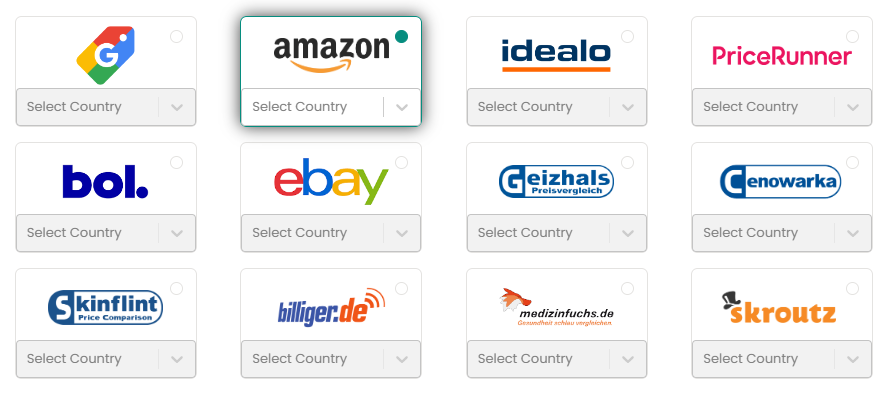










Missing an important marketplace?
Send us your request to add it!