
- Product
- Solution for
For Your Industry
- Plans & Pricing
- About us
- Resources

For Your Industry
Monitoring MAP and Promotions in Electronics is one of the most operationally complex challenges facing manufacturers and brands today. As product assortments grow, channels fragment, and promotions become more creative, maintaining pricing discipline requires more than policy documents. It requires data, automation, and continuous analytics across the full retail ecosystem.

MAP compliance in electronics protects brand value, prevents price erosion, and ensures fair competition among authorized sellers. Because electronics products are highly comparable and price sensitive, even small advertised price violations can quickly spread across channels and damage long term margins.
Electronics is uniquely exposed to pricing volatility. Products are technically comparable, shoppers price check aggressively, and marketplaces reward the lowest visible price. Without MAP compliance, brands experience rapid margin decay and channel conflict.
Effective MAP governance combines clearly defined policies with continuous monitoring of advertised prices across all authorized and unauthorized sellers. This includes marketplaces, regional retailers, and direct to consumer channels.
Manual checks and spreadsheets cannot scale to thousands of SKUs across hundreds of sellers. Data driven monitoring platforms are essential.
tgndata aggregates advertised pricing data across channels, normalizes it by SKU and seller, and highlights MAP violations with contextual evidence that supports enforcement workflows.
Promotions complicate MAP monitoring because discounts often appear indirectly through bundles, rebates, gift cards, or limited-time offers. Electronics brands must distinguish compliant promotions from tactics designed to bypass advertised pricing rules.
Retailers rarely discount electronics with simple price cuts. Instead, they use bundles, instant savings, loyalty pricing, or gift incentives. These tactics can technically comply with MAP language while still eroding perceived value.
Brands must define promotion rules alongside MAP policies. Monitoring must capture not only base price, but also promotional messaging, add to cart discounts, and conditional offers.
Pricing that ignores inventory velocity creates two common failures:
Overstock that requires heavy discounting later
Stockouts that sacrifice margin during peak demand
tgndata identifies promotional signals, bundle language, and conditional discounts, enabling brands to assess compliance within the full promotional context.
Electronics pricing is influenced by a fragmented reseller ecosystem that includes authorized dealers, marketplaces, and gray market sellers. Monitoring MAP requires visibility into who is selling, how they price, and whether they are compliant.
Many brands lose track of which sellers are authorized, which are gray market, and how products move between channels. Unauthorized sellers often undercut MAP, triggering a race to the bottom.
Effective monitoring links pricing data to seller identity and authorization status. This allows brands to prioritize enforcement and address root causes.
Without seller level analytics, enforcement becomes reactive and inefficient.
tgndata maps sellers to authorization status, flags repeat offenders, and provides historical trend analysis to support strategic channel decisions.
Situation
A global electronics brand sees prices collapsing on a major marketplace.
What goes wrong without analytics
Manual checks miss frequent violations, and enforcement lags behind price changes.
Recommended approach
Continuous monitoring with automated alerts.
What tgndata enables
Near real-time violation detection and seller-level reporting.
As electronics catalogs scale, MAP monitoring becomes a data volume problem. Thousands of SKUs, frequent price changes, and global retailers require automated data collection and analysis to maintain compliance.
Large assortments and regional pricing variations overwhelm manual teams. Violations often go unnoticed until they become widespread.
Brands should adopt centralized monitoring systems that normalize data across regions and product hierarchies.
Scalability is impossible without automation.
tgndata processes high volume pricing data, standardizes SKUs globally, and delivers dashboards that scale with product complexity.
Promotion leakage occurs when discounts bypass MAP rules through hidden mechanisms such as add to cart pricing, loyalty offers, or bundled incentives. Detecting these requires deeper promotional intelligence.
Visible prices may appear compliant while effective prices fall below MAP. This creates unfair competition and erodes trust with compliant partners.
Monitoring must capture the full shopper journey, not just shelf price.
Advanced promotion detection separates compliant offers from violations.
tgndata analyzes promotional mechanics and flags effective price breaches even when advertised prices appear compliant.
Situation
Retailers bundle accessories with core electronics to bypass MAP.
What goes wrong without analytics
Brands cannot consistently evaluate bundle value.
Recommended approach
Structured bundle tracking and valuation.
What tgndata enables
Detection of bundle pricing patterns and compliance scoring.
If you want this operationalized across thousands of SKUs, multiple marketplaces, and regional retailers, MAP and promotion monitoring must move from policy enforcement to continuous analytics. This is where data driven platforms replace manual workflows and enable proactive pricing governance.
Monitoring MAP and promotions is only effective when paired with internal governance processes. Clear ownership, escalation paths, and performance metrics turn data into action.
Data without process leads to alert fatigue. Violations are identified but not resolved.
Define enforcement workflows, assign ownership, and measure compliance over time.
Integrated reporting supports faster decision making.
| Feature or Capability | Business Benefit | KPI Impact | Role Owner |
|---|---|---|---|
| Automated MAP tracking | Faster violation detection | Compliance rate | Pricing manager |
| Promotion intelligence | Reduced hidden discounting | Margin protection | eCom analyst |
| Seller level analytics | Targeted enforcement | Repeat offender reduction | Brand strategist |
| Historical trend analysis | Strategic channel decisions | Revenue stability | SEO lead |
Situation
Different regions have different MAP thresholds.
What goes wrong without analytics
Teams apply incorrect rules.
Recommended approach
Region specific monitoring logic.
What tgndata enables
Localized compliance tracking.
Electronics brands must decide whether to build internal monitoring tools, buy a pricing intelligence platform, or adopt a hybrid approach. Each option has tradeoffs in cost, scalability, and speed.
Internal tools offer control but require ongoing engineering and maintenance.
Platforms accelerate deployment and scale quickly but require vendor trust.
Combines internal policy logic with external data collection.
Electronics specific promotion detection
Marketplace coverage
Seller identity resolution
Scalable data pipelines
Shallow promotion analysis
Limited SKU scalability
Poor enforcement workflows
tgndata is designed for hybrid deployment, integrating with internal systems while delivering scalable monitoring.
Situation
Compliant retailers complain about unfair competition.
What goes wrong without analytics
Brands lack evidence to act.
Recommended approach
Transparent compliance reporting.
What tgndata enables
Objective enforcement and partner trust.
MAP monitoring in electronics tracks advertised prices across retailers to ensure compliance with manufacturer policies. It focuses on detecting visible and hidden price violations that can erode brand value and cause channel conflict.
Promotions often use bundles, rebates, or conditional discounts that mask true pricing. These tactics make it difficult to identify violations without advanced promotion detection and analytics.
Effective MAP monitoring should run continuously. Electronics pricing changes frequently, and delayed detection allows violations to spread rapidly across channels.
Yes, MAP policies can apply to marketplace sellers. However, enforcement requires visibility into seller identity, authorization status, and marketplace pricing mechanics.
Brands need advertised prices, promotional messaging, bundle components, and effective price calculations to fully evaluate promotion compliance.
It is both. Legal teams define policies, but analytics teams operationalize monitoring and enforcement using data-driven tools.
Monitoring MAP and Promotions in Electronics is no longer optional. It is a strategic capability that protects margins, strengthens channel relationships, and supports long-term brand equity. Electronics brands that treat MAP monitoring as a data and analytics function gain control over pricing outcomes rather than reacting to violations after the damage is done.
tgndata helps electronics brands operationalize MAP and promotion monitoring with scalable pricing intelligence, promotion detection, and enforcement analytics built for complex retail ecosystems.





We use cookies to provide you with an optimal experience, for marketing and statistical purposes only with your consent, which you may revoke at any time. Please refer to our Privacy Policy for more information.
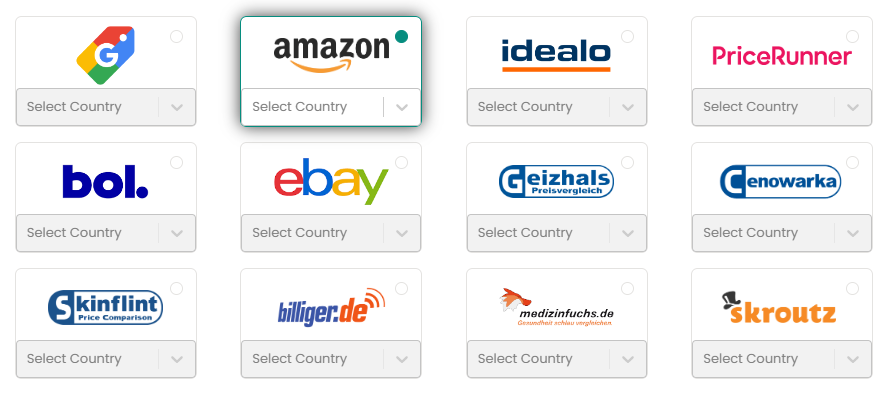










Missing an important marketplace?
Send us your request to add it!