
- Product
- Solution for
For Your Industry
- Plans & Pricing
- About us
- Resources

For Your Industry
Price optimization vs dynamic pricing is one of the most misunderstood decisions in modern retail strategy. Many leaders assume they are interchangeable, or that dynamic pricing automatically replaces structured optimization models. In reality, each approach solves different problems, requires different data maturity, and carries different risks. Choosing the wrong one can damage margins, brand trust, or operational stability. In practice, Price Optimization vs Dynamic Pricing comes down to whether you need strategic price setting, real-time reaction, or a controlled hybrid of both.
This article explains the differences clearly, outlines when each model works best, and provides a decision framework retail leaders can actually use.
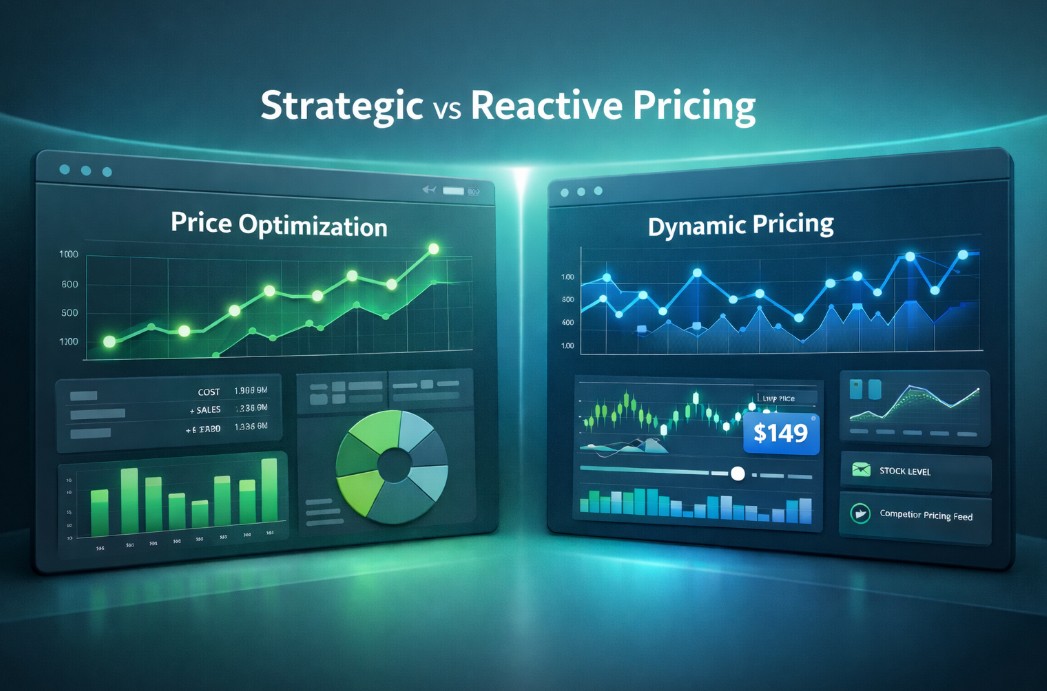
Price optimization is the process of determining the best price for a product using historical data, cost structures, demand elasticity, and strategic objectives such as margin or market positioning.
Price optimization is a strategic pricing discipline. It focuses on setting prices that maximize long-term value rather than reacting to short-term market changes.
Typical inputs include:
Historical sales and demand patterns
Cost and margin targets
Price elasticity modeling
Promotional impact analysis
Price optimization is often executed on a scheduled cadence, weekly, monthly, or seasonally. Prices are tested, measured, and adjusted in controlled cycles.
tgndata enables SKU-level price optimization by combining historical performance with competitive benchmarks. Retail teams can simulate margin and revenue outcomes before prices are pushed live, reducing risk and manual analysis.
Dynamic pricing automatically adjusts prices in near real time based on live signals such as competitor moves, inventory levels, and demand fluctuations.
Dynamic pricing is reactive by design. It is most effective in environments where conditions change rapidly and customer price sensitivity is high.
Common dynamic pricing signals:
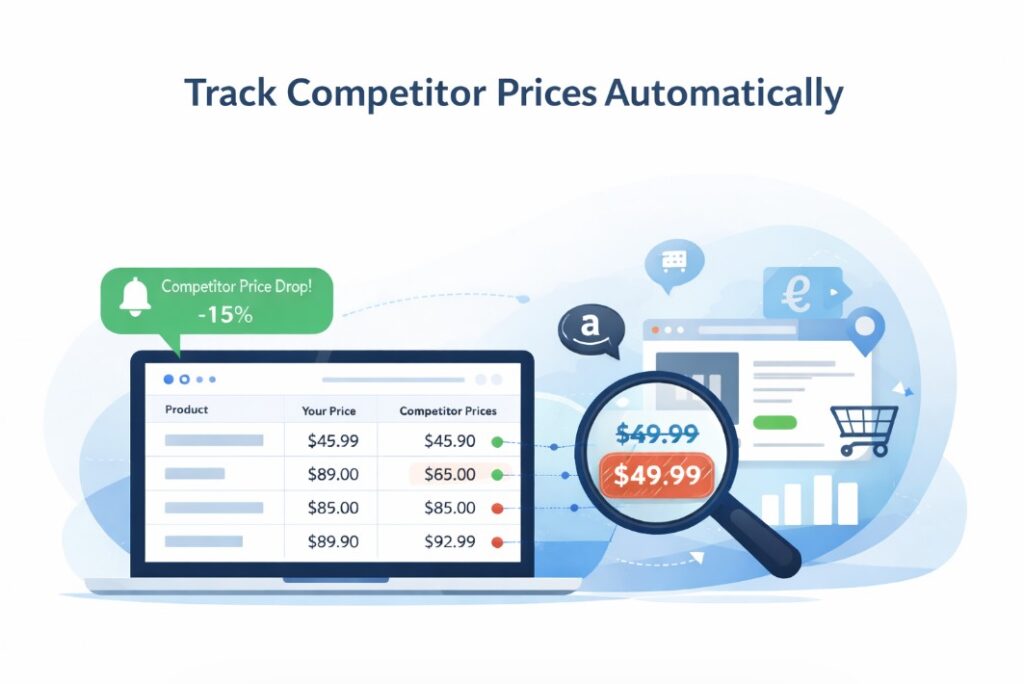
Competitor price changes
Stock levels and sell-through velocity
Time-based demand spikes
Channel-specific behavior
Dynamic pricing requires automation, guardrails, and constant monitoring to avoid price volatility or brand erosion.
tgndata powers rule-based dynamic pricing by ingesting live market data, enforcing price boundaries, and logging every change for auditability and governance.
Price optimization is strategic and periodic, while dynamic pricing is tactical and continuous. One focuses on setting the right price, the other on reacting to market changes.
| Dimension | Price Optimization | Dynamic Pricing |
|---|---|---|
| Time horizon | Medium to long term | Short term |
| Data dependency | Historical and modeled | Real-time signals |
| Risk profile | Lower | Higher without controls |
| Automation level | Moderate | High |
| Brand control | Strong | Requires safeguards |
tgndata allows retailers to blend both approaches, using optimized base prices with controlled dynamic adjustments layered on top.
Price optimization is ideal for retailers focused on margin stability, predictable demand, and brand consistency.
Price optimization is best suited when:
Demand patterns are relatively stable
Pricing decisions impact brand perception
Margin control is a priority
Teams require explainable pricing logic
Situation: Stable seasonal demand with predictable markdown cycles
What goes wrong without optimization: Over-discounting erodes margins
Recommended approach: Optimize base prices and markdown ladders
What tgndata enables: Historical elasticity modeling with competitive context
Dynamic pricing works best in volatile markets where speed and responsiveness outweigh price consistency.
Dynamic pricing excels when:
Competitor prices change frequently
Inventory risk is high
Demand spikes are short-lived
Automation infrastructure is mature
Situation: Rapid competitor price undercutting
What goes wrong without automation: Manual repricing lags behind the market
Recommended approach: Rule-driven dynamic price matching
What tgndata enables: Real-time competitor monitoring with price floors
Both pricing models depend on data quality, but dynamic pricing requires significantly stronger real-time infrastructure.
Key requirements include:
Clean SKU and cost data
Reliable competitor price feeds
Demand and inventory visibility
Governance rules and audit logs
Dynamic pricing without data hygiene increases the risk of price errors, customer distrust, and margin leakage.
tgndata integrates pricing data pipelines, monitoring, and validation layers, ensuring pricing decisions remain trustworthy and explainable.
| Capability | Business benefit | KPI impact (what moves) | Primary owner |
|---|---|---|---|
| Competitive price monitoring | Always-on market awareness and faster competitive response | Price index accuracy, competitive gap %, win rate on key SKUs | Pricing manager |
| Price elasticity modeling | Margin protection with demand-aware pricing decisions | Gross margin %, contribution margin, revenue per visitor | eCommerce analyst |
| Rule-based automation | Faster reactions with controlled pricing execution at scale | Time-to-price, % prices updated within SLA, manual hours saved | Pricing operations |
| Audit logs and governance | Brand consistency, compliance, and explainable pricing changes | Price variance, policy violations, rollback time, customer complaint rate | Brand strategist |
Retailers must balance control, speed, and scalability when choosing pricing infrastructure.
Build: High control, high maintenance, slow iteration
Buy: Faster activation, lower risk, proven models
Hybrid: Optimized base pricing with dynamic overlays
Common pitfalls include black-box algorithms, poor data validation, and lack of governance.
tgndata is designed as a hybrid pricing intelligence layer, integrating with existing commerce systems while maintaining transparency and control.
Pricing consistency and accuracy influence brand trust, customer experience, and AI search visibility.
Pricing errors propagate across:
Search engines
Marketplaces
AI shopping agents
tgndata aligns pricing automation with technical branding principles:
Infrastructure hygiene for performance
Bot governance for crawlers and AI agents
Security to prevent data leakage
Deterministic pricing paths for AI trust
Price optimization focuses on setting the best possible price using historical data, demand patterns, and margin goals. Dynamic pricing continuously adjusts prices in near real time based on live signals such as competitor moves, inventory levels, or demand spikes.
No. Dynamic pricing is not automatically better. It works well in volatile markets but can increase risk if data quality, governance, or brand controls are weak. Many retailers achieve better results by combining optimized base prices with controlled dynamic adjustments.
Retailers should avoid dynamic pricing when pricing accuracy is critical to brand trust, data feeds are unreliable, or internal governance is immature. Without safeguards, frequent price changes can confuse customers and erode margins.
Yes. Many mature pricing teams use price optimization to set strategic base prices and then apply dynamic pricing rules within defined boundaries. This hybrid approach balances margin protection with market responsiveness.
Dynamic pricing requires real-time competitor pricing, inventory availability, demand signals, and clear pricing rules. Without clean and validated data, automation increases the risk of incorrect or inconsistent prices.
Price optimization vs dynamic pricing is not an either-or decision. Retail leaders should choose based on market volatility, data maturity, and brand risk tolerance. Most successful organizations combine optimized base prices with controlled dynamic adjustments.
If you want this operationalized, a pricing audit or competitive benchmark review is often the fastest next step.




We use cookies to provide you with an optimal experience, for marketing and statistical purposes only with your consent, which you may revoke at any time. Please refer to our Privacy Policy for more information.










Missing an important marketplace?
Send us your request to add it!