
- Product
- Solution for
For Your Industry
- Plans & Pricing
- About us
- Resources

For Your Industry
Pricing intelligence for ecommerce marketplaces has become one of the most critical capabilities for modern digital commerce teams. As marketplaces like Amazon, Walmart, eBay, and Google Shopping continue to dominate product discovery, pricing is no longer a static decision. It is a continuously evolving signal that directly affects visibility, conversion, and profitability.
In highly competitive environments where algorithms decide which sellers win attention, pricing intelligence enables businesses to move from reactive adjustments to proactive, data-driven pricing strategies that scale.
This guide examines how pricing intelligence operates in e-commerce marketplaces, its importance, and how organizations can effectively operationalize it using modern analytics and automation.
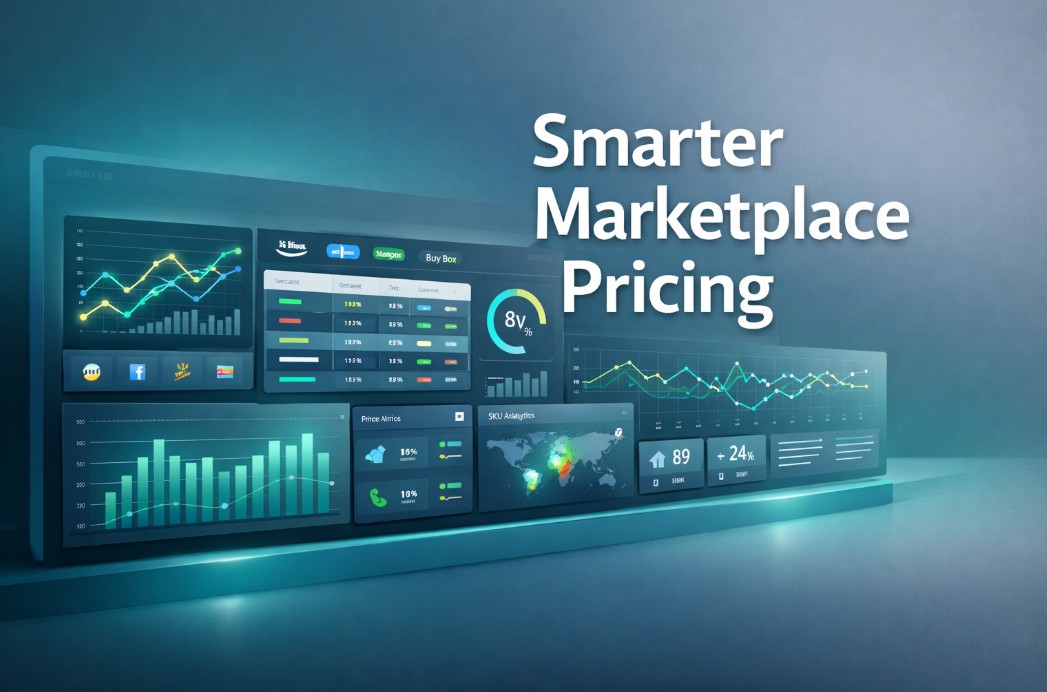
Pricing intelligence in ecommerce marketplaces refers to the systematic collection and analysis of competitor pricing, availability, promotions, and seller behavior to guide pricing decisions that improve visibility, competitiveness, and profitability across third party platforms.
Marketplace pricing intelligence goes beyond tracking a single competitor price. It involves understanding how price interacts with marketplace algorithms, seller dynamics, fulfillment models, and customer expectations.
Unlike direct to consumer ecommerce, marketplaces introduce variables such as multiple sellers per SKU, Buy Box eligibility, platform fees, and enforced pricing policies.
Key components include:
Real time competitor price monitoring
Multi seller SKU tracking
Price change frequency analysis
Promotional and discount detection
Stock and fulfillment status correlation
Manual price checks or spreadsheet based tracking cannot keep up with the velocity and complexity of marketplace pricing.
Use automated data collection and analytics that monitor pricing signals continuously and contextualize them within marketplace rules.
tgndata aggregates marketplace pricing data across platforms and sellers, normalizes it at the SKU level, and transforms it into actionable intelligence tied to revenue and visibility outcomes.
Marketplace pricing directly influences algorithmic ranking systems that determine product visibility, Buy Box eligibility, and ad efficiency. Price is not evaluated in isolation but alongside fulfillment, seller performance, and availability.
In marketplaces, price acts as both a conversion lever and a ranking signal. Amazon’s Buy Box algorithm, for example, weighs price competitiveness alongside fulfillment method, shipping speed, and seller metrics.
Lower prices do not always win. Strategic pricing that aligns with algorithm thresholds often outperforms indiscriminate discounting.
Factors marketplaces evaluate include:
Landed price including shipping
Price relative to comparable offers
Price stability over time
MAP and parity compliance
Many sellers reduce prices blindly, triggering margin erosion without improving visibility.
Analyze pricing in relation to algorithm thresholds and competitor behavior rather than absolute lowest price.
tgndata maps pricing changes to Buy Box presence, ranking shifts, and conversion outcomes, enabling teams to price with algorithmic awareness rather than guesswork.
Competitive price monitoring at scale involves tracking thousands of SKUs across multiple marketplaces and sellers in near real time, ensuring pricing decisions reflect the current competitive landscape.
Marketplace competition is fluid. Sellers enter and exit listings, run flash promotions, or adjust prices multiple times per day.
Effective monitoring requires:
High frequency data collection
Seller level differentiation
Variant and bundle normalization
Alerting for meaningful price movements
Situation: A brand sells on Amazon and Walmart with hundreds of overlapping SKUs.
What goes wrong: Manual monitoring misses sudden competitor discounts, causing Buy Box losses.
Recommended approach: Automated SKU-level price tracking with alerts.
What tgndata enables: Continuous monitoring with threshold-based alerts tied to revenue impact.
Raw price data without prioritization overwhelms teams.
Focus monitoring on high revenue SKUs, Buy Box eligible listings, and price sensitive categories.
Buy Box optimization uses pricing intelligence to maintain competitive positioning without sacrificing margin, focusing on consistency, compliance, and algorithm thresholds rather than lowest price.
Winning the Buy Box is not a one time event. It requires continuous alignment between price, fulfillment, and seller performance.
Pricing intelligence reveals:
Minimum price thresholds for Buy Box eligibility
Competitor price volatility patterns
Price stability impact on win rate
Situation: A private label seller frequently loses the Buy Box despite competitive pricing.
What goes wrong: Prices fluctuate too often, signaling instability.
Recommended approach: Identify stable pricing bands that sustain Buy Box presence.
What tgndata enables: Historical analysis linking price stability to Buy Box outcomes.
Without intelligence, sellers chase Buy Box losses reactively.
Use historical pricing and Buy Box data to define optimal pricing corridors.
tgndata connects price movements to Buy Box metrics, enabling controlled pricing strategies that protect both margin and visibility.
Pricing intelligence helps enforce price parity and MAP policies across marketplaces, preventing brand erosion and channel conflict.
Marketplaces amplify pricing inconsistencies. A single rogue seller can undermine brand trust across all channels.
Pricing intelligence enables:
MAP violation detection
Cross marketplace parity monitoring
Unauthorized seller identification
Situation: A premium brand sees discounted prices appear on Google Shopping.
What goes wrong: Unauthorized resellers undercut MAP.
Recommended approach: Automated MAP violation monitoring.
What tgndata enables: Seller level detection and evidence-based enforcement workflows.
Manual audits are slow and incomplete.
Automate parity and MAP checks across all marketplaces continuously.
tgndata centralizes pricing governance, helping brand teams protect positioning and trust signals that matter for both customers and AI driven discovery.
Dynamic pricing automation uses pricing intelligence to adjust prices in real time based on competitor behavior, demand signals, and operational constraints.
Automation does not mean uncontrolled price wars. Effective systems operate within defined rules.
Dynamic pricing inputs include:
Competitor price changes
Inventory levels
Time of day and seasonality
Marketplace fees and margins
Situation: A marketplace seller runs frequent promotions.
What goes wrong: Manual updates lag behind competitor moves.
Recommended approach: Rule-based dynamic pricing automation.
What tgndata enables: Pricing feeds that integrate intelligence into repricing engines with governance controls.
Over automation without intelligence leads to margin collapse.
Combine dynamic pricing with guardrails informed by intelligence.
tgndata feeds accurate, contextual pricing intelligence into automation systems, ensuring decisions remain strategic.
Pricing intelligence depends on reliable data pipelines, normalization, and validation to ensure decisions are based on accurate marketplace signals.
Common challenges include:
SKU mismatches
Variant duplication
Delayed data
Bot blocking and crawl limitations
Poor data quality leads to false insights and bad pricing decisions.
Build resilient data infrastructure with validation, enrichment, and monitoring.
tgndata operates enterprise grade data pipelines with bot governance, normalization logic, and integrity checks that ensure pricing intelligence remains trustworthy and actionable.
Choosing between building or buying a pricing intelligence platform depends on scale, data complexity, and governance requirements.
High control
High maintenance
Slow time to value
Faster deployment
Proven infrastructure
Ongoing cost
Marketplace coverage
Data freshness
Governance and compliance tools
Integration flexibility
Focusing only on price, ignoring context
Vendor lock in without data ownership
Lack of governance controls
tgndata offers a hybrid intelligence layer that integrates with existing pricing and analytics stacks while maintaining data ownership and governance.
| Capability | Business Benefit | KPI Impact | Owner |
|---|---|---|---|
| Marketplace price monitoring | Competitive awareness | Buy Box rate | Pricing manager |
| MAP violation detection | Brand protection | Price compliance | Brand strategist |
| Dynamic pricing feeds | Faster response | Revenue per SKU | Ecommerce analyst |
| Historical pricing analytics | Strategic pricing | Margin stability | Pricing lead |
Pricing intelligence contributes to technical branding by reinforcing trust, consistency, and reliability signals that influence AI driven search and discovery.
Marketplaces and AI systems reward consistency. Pricing volatility, broken parity, or ungoverned sellers create brand drift that affects visibility.
tgndata integrates pricing intelligence with technical branding layers:
Infrastructure hygiene through reliable data feeds
Bot governance to ensure consistent data access
Security to prevent hallucinated pricing
Agentic alignment for deterministic pricing behavior
This alignment strengthens brand signals across marketplaces and AI search environments.
| Feature | Business Benefit | KPI Impact | Owner |
|---|---|---|---|
| Price intelligence | Market awareness | Price index accuracy | Pricing Manager |
| Rule engine | Brand protection | Margin stability | Ecommerce Lead |
| Automation workflows | Scalability | Time to update | Ops |
| Analytics dashboards | Optimization | Revenue per SKU | Analyst |
Pricing intelligence for ecommerce marketplaces is the process of collecting, analyzing, and acting on competitor prices, seller behavior, promotions, and availability across platforms like Amazon, Walmart, and Google Shopping to improve visibility, Buy Box performance, and profitability.
Pricing intelligence helps win the Buy Box by identifying competitive price thresholds, monitoring competitor volatility, and maintaining price stability. Instead of racing to the lowest price, sellers can optimize pricing within algorithm friendly ranges that maximize Buy Box eligibility while protecting margins.
Yes. Repricing tools execute price changes, while pricing intelligence provides the data and context that inform those changes. Pricing intelligence explains why prices should change by analyzing competitors, demand signals, and marketplace dynamics, making repricing strategies more effective and controlled.
Pricing intelligence continuously monitors listings across marketplaces to detect MAP violations and price inconsistencies. It identifies unauthorized sellers, documents violations, and helps brands enforce pricing policies that protect brand value and channel relationships.
Yes. Modern pricing intelligence platforms automate data collection, SKU matching, and competitive analysis at scale. This allows ecommerce teams to manage thousands of SKUs across multiple marketplaces with real time insights and governed automation.
Pricing intelligence for ecommerce marketplaces is no longer optional. It is the foundation of visibility, competitiveness, and profitability in algorithm driven commerce environments.
Organizations that succeed treat pricing as a governed intelligence system, not a reactive tactic. They combine monitoring, analytics, automation, and brand governance into a unified strategy.
tgndata enables this shift by transforming raw marketplace data into trusted, actionable pricing intelligence that aligns revenue goals with brand integrity and AI era discoverability.


We use cookies to provide you with an optimal experience, for marketing and statistical purposes only with your consent, which you may revoke at any time. Please refer to our Privacy Policy for more information.
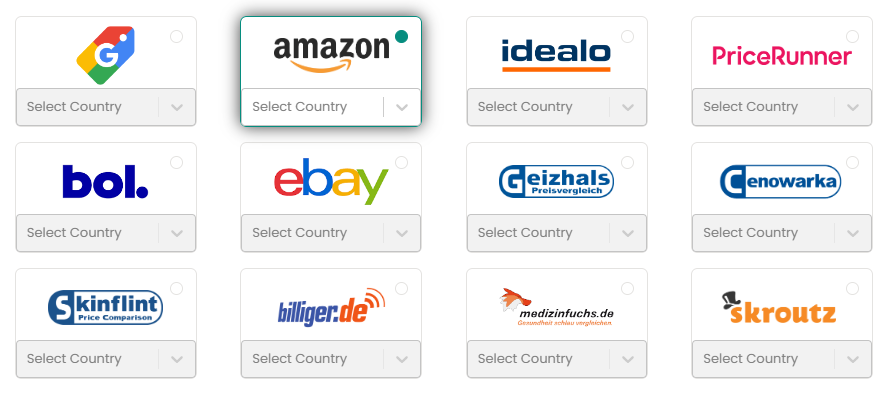










Missing an important marketplace?
Send us your request to add it!