
- Product
- Solution for
For Your Industry
- Plans & Pricing
- About us
- Resources

For Your Industry
Preparing for 2026 requires a fundamentally new level of pricing readiness because retail markets, customer expectations, and competitive behaviors continue to evolve at remarkable speed. Traditional seasonal planning cycles and historical pricing models no longer provide the accuracy or responsiveness needed to operate in an environment shaped by volatile demand patterns, economic uncertainty, and increasingly automated competitors. Retailers who attempt to manage pricing through static rules or limited visibility into competitor actions find themselves reacting too slowly to market movements. This creates margin leakage, lower conversion, growing inventory risk, and weakened customer trust. A comprehensive 2026 Pricing Readiness Checklist helps retailers organize their capabilities, identify gaps, and build a pricing engine that is intelligent, automated, and adaptive to real-time signals.
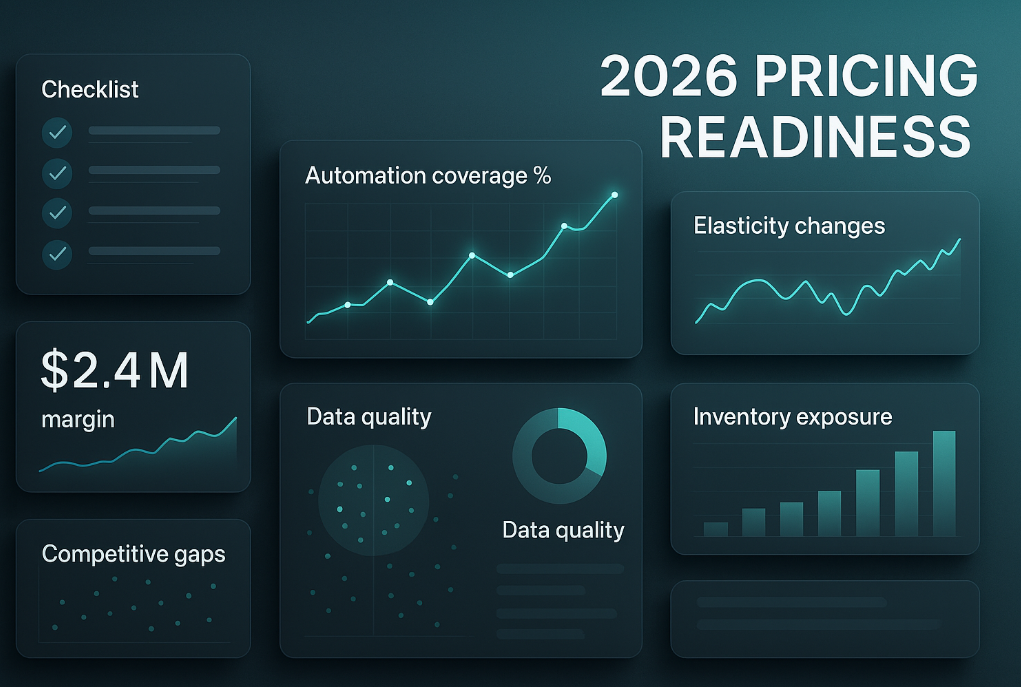
Pricing readiness for 2026 is defined by three interconnected capabilities. The first is data readiness, which determines how effectively an organization collects, interprets, and operationalizes real time signals. The second is automation readiness, which dictates whether insights translate into timely actions across channels without manual delays. The third is competitive readiness, which reflects how well a retailer positions itself within a landscape dominated by sophisticated repricing engines and increasingly empowered customers. When these capabilities work together, retailers develop pricing systems that respond instantly to market behavior, protect margin through disciplined guardrails, and unlock new revenue opportunities through precision. This article outlines the complete 2026 Pricing Readiness Checklist and provides detailed guidance for retail leaders who want to strengthen their pricing operations for the year ahead.
The 2026 retail environment differs from the past in several critical ways. Customer behavior is more dynamic, competitive cycles move faster, technology maturity accelerates pricing automation, and external economic pressures influence demand with greater unpredictability. Retailers cannot rely on static pricing calendars or generic discount strategies. They must anticipate change, react in real time, and build a pricing function capable of continuous optimization.
Customers have become accustomed to immediate information, transparent comparisons, and pricing that reflects competitive context. They evaluate retailers using price history tools, marketplace benchmarks, and automated alerts. If a retailer’s pricing appears outdated or misaligned with the broader market, shoppers lose trust quickly. Retailers preparing for 2026 must deliver pricing that feels consistent, competitive, and updated in response to observable changes in market conditions.
Large retailers and marketplace sellers already operate with automated repricing tools that update price hundreds of times per day. Smaller and mid market retailers risk losing their competitive edge unless they invest in automation that can match the pace of algorithmic competitors. 2026 pricing readiness requires the ability to monitor competitor actions at high frequency and execute responses instantly when appropriate.
Inflation cycles, cost fluctuations, supply chain instability, and regional demand variations influence optimal pricing decisions. Pricing teams must incorporate fresh data into decision making, rather than relying on rules created months earlier. Real time cost, demand, and inventory signals ensure that price remains aligned with both profitability objectives and customer value perception.
Retailers face shortening product cycles, unpredictable promotional calendars, and greater SKU diversity. Inventory levels can swing rapidly throughout the year, creating risk for aged stock and lost revenue for constrained stock. Pricing readiness for 2026 requires inventory sensitive pricing logic that adjusts discount depth and timing based on sell through performance, coverage levels, and forecasted risk.
AI driven pricing engines are becoming mainstream, delivering elasticity recalculation, demand forecasting, anomaly detection, and scenario simulation. Retailers without AI support will struggle to keep pace with organizations that use automated intelligence to optimize thousands of micro decisions per hour.
These factors make 2026 a critical inflection point for pricing strategy. Retailers who prepare effectively strengthen their competitive position and protect margin. Those who do not will face widening performance gaps.
This checklist provides a structured method for evaluating and upgrading pricing readiness. It covers data, analytics, automation, governance, competitive monitoring, cross functional alignment, and technology maturity. Each category contains capabilities that define a modern pricing organization.
Data readiness measures how quickly and accurately a retailer can gather, cleanse, and activate the information required to make pricing decisions. Without reliable data, automation and analytics cannot operate effectively.
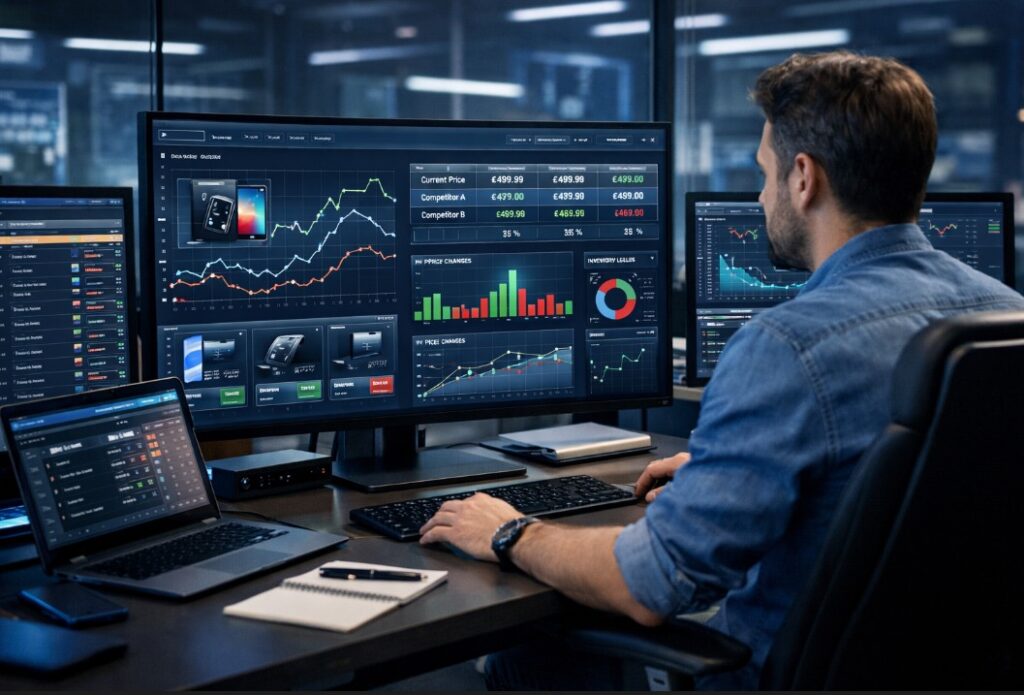
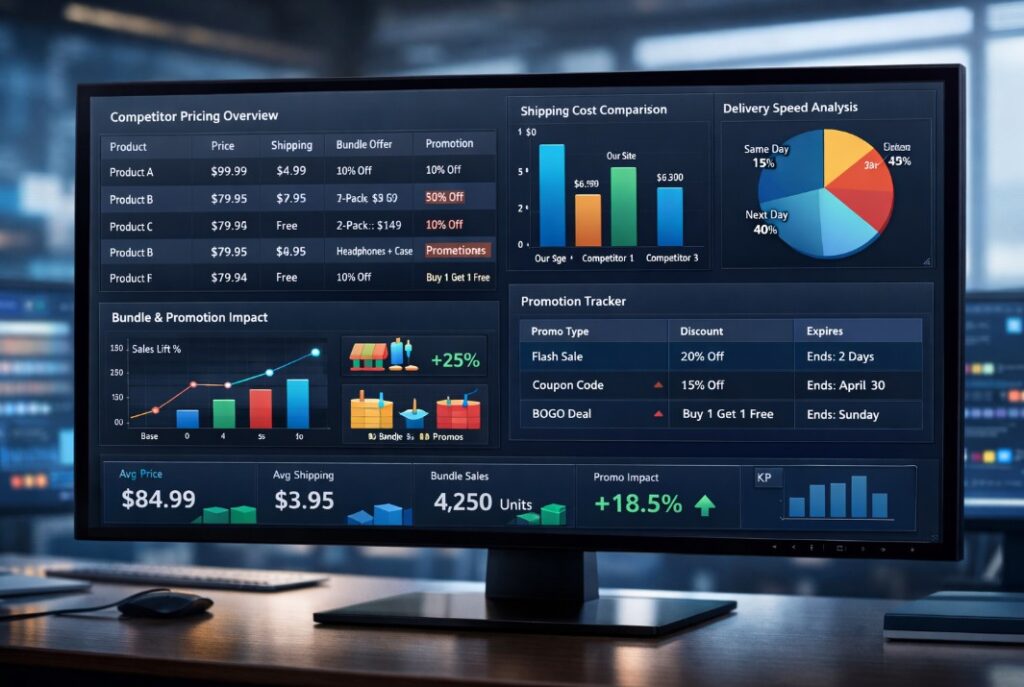
Retailers must collect competitive intelligence at high frequency, including list prices, promotional prices, bundle structures, and value adds. Missing or outdated competitive data creates blind spots that lead to unnecessary discounting, lost traffic, or weakened price perception. In 2026 pricing teams need automated competitive scraping, real time alerts, and the ability to track price movements across all major channels.
Inventory signals must reflect eCommerce fulfillment centers, store networks, marketplace listings, and regional stock positions. Unified visibility enables pricing teams to adjust discounts based on true availability, rather than relying on incomplete or siloed data. Without clear inventory visibility, pricing decisions may unintentionally accelerate stock outs or fail to liquidate overstock efficiently.
Retailers should gather SKU level data on traffic, conversion, add to cart behavior, searches, ratings, reviews, and bounce patterns. Granular demand data allows pricing teams to identify shifts in elasticity or purchase intent throughout the day. These insights support dynamic price adjustments that capture revenue and protect margin.
Cost to serve, shipping fees, labor constraints, and regional capacity pressures must be integrated into pricing decisions. Pricing teams who ignore operational data frequently create offers that weaken profitability once fulfillment costs are factored in.
Data readiness also requires governance that ensures accuracy, timeliness, and consistency. Retailers preparing for 2026 must eliminate data gaps, reduce latency, and maintain high quality standards across all inputs.
Analytics readiness focuses on whether a retailer can interpret data effectively and convert insights into clear pricing actions.
Retailers must understand price sensitivity at a granular level. Elasticity models should update continuously based on live demand signals. Static elasticity calculations lead to inaccurate pricing that either over discounts or fails to capture revenue opportunities.
Customers, SKUs, and categories should be segmented using behavioral and economic indicators. Segmentation supports targeted pricing that optimizes margin without relying on blanket rules.
Analytics teams must forecast demand, inventory exposure, and competitive movements. Scenario modeling helps predict potential outcomes of price changes, enabling data driven strategy instead of guesswork.
Markdown depth, timing, and duration should reflect inventory velocity, forecasted risk, and expected price responsiveness. Advanced markdown modeling reduces margin leakage and accelerates sell through for high risk products.
Pricing teams require actionable dashboards, not static spreadsheets. Decision support systems must present real time insights, anomaly alerts, and performance indicators.
Automation readiness determines whether pricing decisions can be deployed instantly at scale. Without automation, retailers cannot keep pace with competitive movements or dynamic customer behavior.
Retailers should implement rules that govern how pricing responds to competitor gaps, elasticity shifts, or inventory signals. Rules may include thresholds, triggers, guardrails, and automated resets once conditions change.
Automation must push updates across all channels without delay. Manual processes are too slow for modern retail environments.
Promotions should activate and deactivate automatically based on performance. Sunset rules prevent promotions from running longer than necessary and eroding margin.
Margin floors, price ceilings, and brand guidelines must be enforced automatically. Guardrails prevent over discounting, channel conflicts, and unintended price cascades.
AI driven automation enables scenario evaluation, anomaly detection, and predictive adjustments. AI enhances accuracy and reduces reliance on manual judgment.
Competitive readiness measures a retailer’s ability to maintain price relevance and defend margin in an increasingly aggressive environment.
Retailers must monitor competitor prices multiple times per hour for key SKUs. Slow tracking results in outdated pricing and lost conversion.
Retailers should match competitors only when substitution risk is high and gaps exceed defined thresholds. Intelligent matching avoids unnecessary price wars.
Competitive readiness includes understanding where not to match. Retailers can win on value through bundles, services, or category depth even without matching every price drop.
Marketplaces often shape public price perception. Pricing teams must track marketplace movements separately and apply rules based on marketplace behavior.
Competitive pricing must support overall brand positioning. Premium brands require pricing authority while value driven retailers must maintain aggressive competitiveness.
Pricing strategy requires more than analytics and automation. The organization must support cross functional coordination, talent development, and collaborative decision making.
Clear ownership ensures decisions move quickly and avoid operational delays. Pricing teams must have authority to act on insights.
Pricing, merchandising, supply chain, marketing, and finance must collaborate. Misalignment leads to conflicting targets, unclear guardrails, and inconsistent execution.
Retailers should gather SKU level data on traffic, conversion, add to cart behavior, searches, ratings, reviews, and bounce patterns. Granular demand data allows pricing teams to identify shifts in elasticity or purchase intent throughout the day. These insights support dynamic price adjustments that capture revenue and protect margin.
Retail teams must understand data interpretation, rule design, elasticity, and AI impact. Upskilling is essential for maintaining a competitive pricing function.
Modern pricing requires investment and organizational commitment. Leaders must support budget allocation, technology adoption, and cultural transformation.
Technology readiness measures whether systems support real time data flows, automation, scalability, and integration.
Legacy systems with data latency create pricing delays. Retailers need real time or near real time infrastructure.
Pricing engines must support large SKU catalogs and frequent updates without performance issues.
Pricing systems must integrate with eCommerce platforms, POS systems, marketplaces, and analytics engines.
AI should power forecasting, elasticity calculation, anomaly detection, and price recommendations.
Technology must provide transparency into price updates, rule triggers, and edge case events.
Retailers can evaluate readiness using the following steps.
Step 1. Score each readiness category
Assign scores for data readiness, analytics readiness, automation readiness, competitive readiness, organizational readiness, and technology readiness.
Step 2. Identify gaps with the highest economic impact
Not all gaps carry equal weight. For example, missing competitive data may harm performance more than a lack of scenario modeling.
Step 3. Prioritize capabilities into near-term and long-term initiatives
Capabilities like competitive tracking and automation often deliver immediate results. AI maturity and organizational redesign may require longer planning cycles.
Step 4. Implement readiness upgrades in phases
Rollout should follow a structured sequence to prevent disruption.
Step 5. Measure outcomes continuously
Monitor improvements in margin, conversion, competitiveness, and inventory exposure.
The most useful pricing readiness KPIs include:
Margin rate improvement by SKU and category
Price competitiveness index
Automation coverage rate
Rule execution speed
Competitive gap response times
Sell through velocity
Inventory exposure reduction
Forecast accuracy
Markdown efficiency
These metrics reflect how effectively pricing systems operate in real time.
Retailers must avoid:
Outdated competitive data
Manual price updates
Inconsistent rules and guardrails
Siloed inventory data
Underinvestment in automation
Overly broad discounting
Lack of cross functional alignment
Slow decision cycles
Addressing these pitfalls improves organizational resilience and strategic performance.
AI transforms readiness through prediction, automation, and continuous optimization.
Predictive forecasting
AI identifies demand shifts before they become visible in sales data.
Elasticity recalculation
AI recalculates elasticity using live signals rather than historical models.
Competitive anomaly detection
AI recognizes unusual competitor activity, such as surprise flash sales.
Price recommendation engines
AI recommends optimal prices based on thousands of variables.
Governance and compliance
AI maintains guardrails and prevents pricing errors.
Retailers will continue to accelerate automation and intelligence. Emerging trends include:
Fully autonomous price engines
Real time customer level pricing
Supply chain integrated pricing
Predictive competitor modeling
Region specific price optimization
AI driven promotional planning
The future belongs to retailers with intelligent pricing ecosystems.
2026 presents a pivotal moment for pricing transformation. Retailers who build strong data foundations, adopt automation at scale, and enhance competitive positioning will outperform peers in both revenue and profitability. A complete 2026 Pricing Readiness Checklist ensures that organizations evaluate capability gaps, prioritize strategic investments, and develop pricing systems that operate with intelligence and speed. tgndata supports retailers with advanced pricing analytics and automation platforms that turn real time signals into operational advantage. Contact us to strengthen your pricing readiness for 2026.





We use cookies to provide you with an optimal experience, for marketing and statistical purposes only with your consent, which you may revoke at any time. Please refer to our Privacy Policy for more information.










Missing an important marketplace?
Send us your request to add it!