
- Product
- Solution for
For Your Industry
- Partners
- Plans & Pricing
- Resources

For Your Industry
Boxing Day Pricing Strategy has become one of the most complex and strategically important pricing disciplines in modern retail. Boxing Day has historically been known for large crowds, aggressive discounts, and highly promotional competition. Yet today the real advantage does not come from blanket markdowns but from an intelligent, real time pricing engine that interprets competitive signals, customer behavior, inventory constraints, and operational pressures with high precision. Retailers who rely on static rules or broad promotional calendars rarely maximize profitability during this intense shopping window. The environment is simply too fast, too competitive, and too dependent on rapid shifts in shopper intent. A modern Boxing Day Pricing Strategy uses real time analytics and automated execution to convert post Christmas demand into measurable economic value.
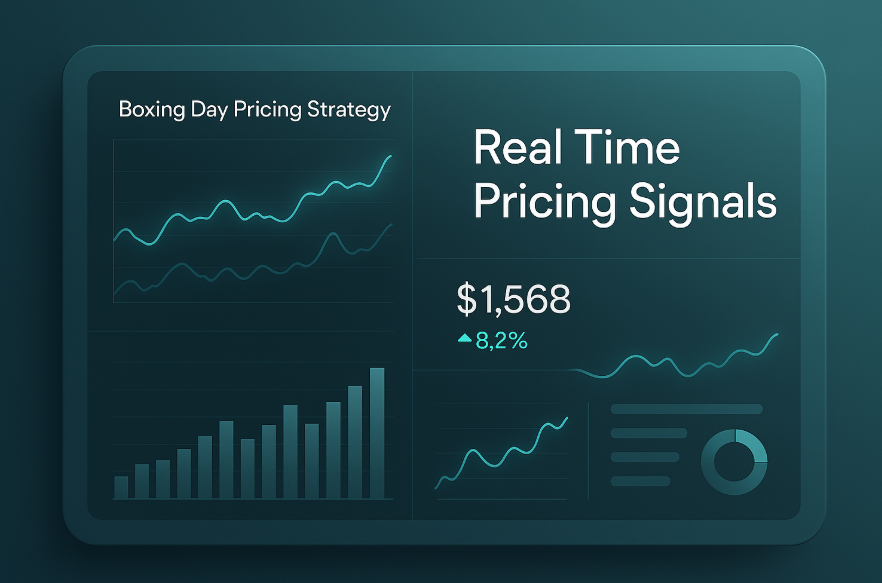
Boxing Day represents a narrow but powerful moment where customers arrive with strong motivation to find deals, clear leftover holiday lists, and take advantage of seasonal markdowns. This creates a surge in digital traffic and store footfall that compresses competitive dynamics into a matter of hours. Errors in judgment carry high financial consequences because discounting that is either too aggressive or too slow can rapidly erode margin or reduce conversion. Retailers who succeed on December 26 are those who combine pricing intelligence, automated decisioning, and continuous optimization. These capabilities create adaptive pricing systems that respond to market behavior rather than predict it through static historical models. The following article provides a deep exploration into the mechanisms, tactics, workflows, and signals that define a high performing Boxing Day Pricing Strategy. It also offers practical guidance for retailers seeking to modernize their approach using real time pricing science.
A successful Boxing Day Pricing Strategy depends on rapid interpretation of market signals because the speed of change is significantly greater than in typical promotional cycles. The post Christmas period shifts consumer psychology from emotional gifting behavior toward rational value focused purchasing. This means shoppers evaluate price competitiveness more aggressively, compare more retailers in shorter time periods, and respond to visible signals that indicate whether a deal is truly compelling. Retailers who rely on pre set discounts risk losing traffic within minutes as competitors deploy flash promotions or automated repricing updates.
Customer expectations rise dramatically during Boxing Day events. Shoppers anticipate near constant deal rotation, lightning style markdowns, and dynamic offers that evolve throughout the day. When pricing appears static or unchanged, customers often interpret this as a lack of value. They quickly redirect attention to retailers whose pricing behavior feels more responsive. A modern Boxing Day Pricing Strategy must therefore incorporate real time competitive intelligence, live price elasticity signals, and immediate pricing workflows. These capabilities ensure that offers remain aligned with actual demand and competitive movements.
Inventory imbalances also intensify during this period. Retailers often enter December 26 with large quantities of seasonal merchandise that must be cleared before end of year financial cycles close. Other categories may have only narrow remaining inventory because holiday demand exceeded expectations. A generic markdown schedule fails to reflect these nuanced stock positions. Real time data allows pricing teams to adjust discount depth based on sell through pace, hours of coverage remaining, and forecast updates. This reduces unnecessary margin loss while accelerating liquidation for high risk products.
Competitive aggression increases significantly on Boxing Day. Marketplaces, automated repricers, and large scale retailers all adjust prices multiple times per hour. Without similar levels of visibility, a retailer may fall behind within minutes. A strong Boxing Day Pricing Strategy requires continuous monitoring, rule based responses, and intelligent filtration that differentiates noise from meaningful competitor actions. This prevents overreaction and preserves the integrity of margin guardrails.
Finally, margin exposure expands rapidly. The combination of high volume and heavy discounting can create severe margin leakage if pricing is not governed by data and automation. Real time precision ensures that pricing decisions are anchored in true market conditions rather than broad assumptions. It protects financial outcomes while satisfying customer demand for compelling value.
Real time signals are the foundation of any advanced pricing capability during Boxing Day. Static reports or historical analysis alone cannot capture the velocity of post Christmas retail activity. High performing pricing engines rely on four major categories of live signals.
Competitor movements intensify dramatically on December 26. Retailers often deploy hourly price changes, flash promotions, and algorithmic adjustments that can redefine price positioning almost instantly. The most insightful signals include:
Hourly price updates across top traffic and top revenue SKUs
Flash discount events triggered by competitor inventory conditions
Marketplace automated repricing cycles that influence perception of value
Value added promotions that include bundles, bonus items, or free accessories
Price indexing on high visibility items that anchor customer expectation
A strong Boxing Day Pricing Strategy does not react blindly to every competitor move. Instead it evaluates which gap thresholds, price differentials, or promotional shifts truly require action. Real time tracking enhances clarity and prevents margin erosion caused by unnecessary discounting.
Demand patterns fluctuate rapidly throughout Boxing Day as customers behave in short bursts of discovery and purchase. Traffic arrives in spikes, conversion may shift dramatically with small price adjustments, and customer intent changes as deals rotate across various retailers. Essential demand signals include:
SKU level traffic surges linked to Boxing Day specific queries
Conversion rate movements that highlight shifts in elasticity
Add to cart velocity that reveals instantaneous buying intent
On site search trends that surface emerging interest patterns
Bounce rates that uncover pricing friction or competitive pressure
These signals reveal when a product requires deeper discounting, when demand is strong enough to maintain price integrity, or when raising price is feasible due to limited inventory and high conversion. Pricing teams who integrate live demand signals operate with sharper accuracy and tighter margin control.
Inventory after Christmas is volatile. Some SKUs accelerate toward complete sell out while others lose relevance instantly. Real time inventory signals include:
Sell through speed versus forecasted performance
Remaining inventory coverage expressed in hours or days
Overstock risk that indicates whether aggressive clearance is necessary
Regional inventory imbalances that require localized pricing
Historical decay curves for similar post season products
Inventory informed pricing ensures alignment between supply constraints and value creation. Retailers reduce costly over markdowns and avoid leaving revenue on the table for items with limited stock.
Operational conditions shift significantly after Christmas. Delivery networks may face congestion, carrier surcharges may increase, and store pickup capacity may fluctuate. Key signals include:
Regional delivery cost changes
Warehouse throughput limitations
Store pickup capacity constraints
Return likelihood indicators for seasonal products
When operational costs rise, pricing strategy can compensate by adjusting thresholds, implementing bundled value structures, or enhancing shipping incentives.
Collectively these signal categories form the backbone of a responsive Boxing Day pricing engine that adapts continuously in real time.
Consumer behavior on Boxing Day is not simply an extension of holiday shopping. It reflects a different mindset, priority structure, and decision making pattern. Understanding these differences is essential for creating a high performing Boxing Day Pricing Strategy.
Gift purchasing often involves emotional motivations, personal connections, and lower sensitivity to price. Boxing Day shopping is fundamentally different. Customers prioritize deal quality, objective value, and price competitiveness. They are more willing to switch brands, shift retailers, and explore alternatives when they perceive a superior offer.
Shoppers observe multiple platforms within seconds. They scan retailer websites, marketplaces, social alerts, price comparison tools, and influencer recommendations. Boxing Day Pricing Strategy must maintain strong competitive positioning because price visibility is extraordinarily high.
When customers perceive strong value, they frequently purchase multiple items. This creates opportunities for bundle pricing, cross sell optimization, and threshold promotions that lift profitability without relying on deeper discounts.
Shoppers are aware that inventory levels after Christmas may be limited. Low stock signals create urgency and allow pricing teams to reduce discount depth on high demand items. Customers often complete purchases more quickly when scarcity becomes visible.
Value takes priority over brand affinity. Retailers must balance competitive pricing with margin discipline. Intelligent Boxing Day Pricing Strategy prevents unnecessary discounting while ensuring perceived value remains strong.
These behavioral dynamics highlight the importance of strategies driven by psychological insight and real time market intelligence.
A high performing Boxing Day Pricing Strategy relies on a structured and integrated framework that combines segmentation, dynamic optimization, and rules based automation.
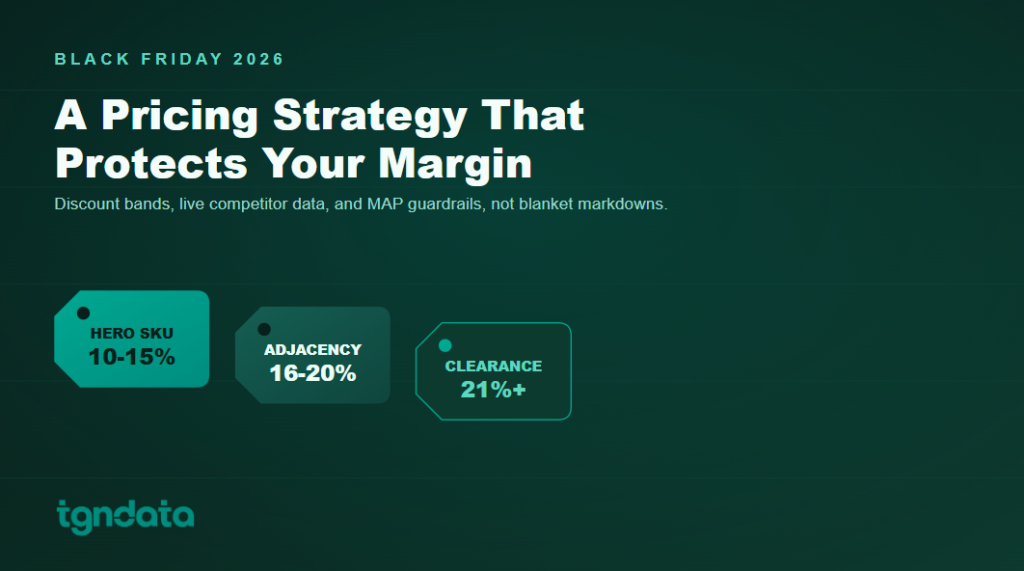
Not all SKUs warrant identical markdown depth. Retailers should segment inventory by elasticity, inventory risk, seasonality, margin contribution, and competitive sensitivity. Segmentation minimizes margin loss by ensuring that aggressive discounts are applied only where necessary.
Markdown decisions should rely on real time analytics rather than historical discount templates. Pricing teams should evaluate:
SKU level conversion
Price responsiveness in the prior 24 hours
Competitive gap thresholds
Inventory liquidation urgency
Sell through targets
Dynamic markdown logic prevents blanket discounting and enables precision at scale.
Bundles create strong perceived value while protecting margin. Retailers can pair high velocity items with high margin accessories. Customers often accept higher total spend because the bundle feels significantly more valuable during Boxing Day events.
Rules ensure retailers do not chase every competitive price update. A structured rule might require action only when a competitor sets a price that deviates beyond a defined threshold or only for a select group of high visibility anchor SKUs.
Some SKUs maintain high demand even after Christmas. Intelligent pricing allows retailers to raise prices slightly or maintain holiday levels when inventory is limited and conversion remains strong.
These components work together to ensure a disciplined, data driven approach that maximizes revenue, margin, and sell through.
Beyond foundational strategy, retailers benefit from tactical moves that leverage high traffic volume and rapid shopper attention.
Flash markdown cycles that run for short durations and create urgency
Value anchors that feature a few deeply discounted items to attract traffic
Real time competitor gap responses based on elasticity and substitution risk
Inventory threshold rules that deepen markdowns only when stock exceeds a defined limit
Accessory and warranty bundles that raise average order value
Regional pricing variation based on local inventory velocity and demand conditions
Continuous elasticity testing through small A B price adjustments
Automated sunset rules that terminate promotions once volume goals are reached
Return sensitive pricing plans that incorporate expected resale challenges
Retailers who apply these tactics with consistency gain stronger financial outcomes during Boxing Day peaks.
Inventory management has a direct impact on margin and customer experience during December 26. Pricing teams must integrate inventory intelligence into every decision.
Seasonal products lose value quickly after Boxing Day. Dynamic pricing accelerates sell through while reducing unnecessary discounting. Retailers can preserve margin on select SKUs while clearing high risk products efficiently.
Products with continued demand should not be placed under deep markdowns. Maintaining or slightly raising price becomes a viable strategy when conversion indicates strong intent.
Older SKUs benefit from aggressive markdowns. Boxing Day offers one of the last effective liquidation windows before deeper January discounts become mandatory.
Pricing decisions must reflect availability across all sales channels including stores, fulfillment centers, and marketplace listings. Unified visibility prevents misaligned pricing and supports consistent customer experience.
Inventory centric pricing ensures alignment between commercial goals and supply chain constraints.
Automation transforms Boxing Day performance by allowing instant, scalable execution of pricing rules across thousands of SKUs.
Automation allows pricing teams to update price in real time, follow market changes precisely, and eliminate manual delays. Guardrails protect margin floors, brand expectations, and competitor alignment rules. Automation also reduces operational risk and ensures consistent execution at scale.
Match competitor price only when gaps exceed a defined tolerance
Trigger incremental markdowns when conversion declines but traffic remains strong
Increase price when inventory coverage falls below target
Automatically retire promotions when sell through objectives are met
Automation translates insights into immediate economic outcomes.
Different categories respond uniquely to post Christmas demand. Category specific pricing strategies improve accuracy and protect margin.
This category faces intense competitive pressure and high price visibility. Bundles that include warranties, accessories, or service plans enhance profitability while staying competitive.
Apparel commonly carries significant seasonal overstock. Micro level markdowns by size, style, and color prevent excessive discounts and increase sell through precision.
Moderate but steady demand combined with strong cross sell potential makes this category ideal for value bundles and threshold promotions.
Gift sets often require rapid clearance while premium items may still sell with light discounting. Cross category promotions can increase cart size significantly.
Category oriented strategy supports revenue optimization across the entire assortment.
The following operational framework supports consistent execution.
Step 1. Gather Real-Time Signals
Monitor competitive pricing, customer behavior, inventory velocity, and fulfillment conditions.
Step 2. Segment the Catalog
Group SKUs by elasticity, life cycle stage, margin contribution, demand forecast, and exposure risk.
Step 3. Apply Pricing Strategy
Use threshold based rules, dynamic markdown logic, and gap optimization policies.
Step 4. Execute Through Automation
Deploy price updates instantly across digital and physical channels.
Step 5. Measure Outcomes
Analyze competitiveness index, margin impact, sell-through speed, and conversion rates.
Step 6. Optimize Continuously
Refine rules based on real time signals throughout the day.
This workflow supports a repeatable cycle of intelligent, responsive pricing decisions.
Important KPIs include:
Sell through velocity
SKU and category margin lift
Price competitiveness index
Conversion rate
Average order value
Bundle attach rate
Inventory risk reduction
Markdown efficiency
Tracking these KPIs ensures alignment with financial and strategic objectives.
Retailers must avoid several common issues:
Over discounting without real time analysis
Slow reaction to competitor signals
Applying uniform discounts across categories
Ignoring fulfillment cost changes
Allowing promotions to extend beyond their optimal lifespan
Avoiding these pitfalls strengthens both customer perception and profitability.
AI elevates pricing performance by improving prediction, speed, and decision accuracy.
Predictive Forecasting
AI identifies upcoming demand movements and recommends proactive pricing adjustments.
Elasticity Recalculation
AI recalculates price elasticity continuously based on real-time purchase signals.
Competitive Anomaly Detection
AI detects unusual competitive events such as unexpected flash sales or sudden undercuts.
Recommendation Engines
AI evaluates thousands of pricing combinations to determine the most profitable outcome.
Governance and Compliance
AI systems enforce guardrails so all pricing moves align with business rules.
AI enabled Boxing Day Pricing Strategy is faster, more precise, and more adaptive than any manual approach.
Future advancements will reshape how retailers manage December 26.
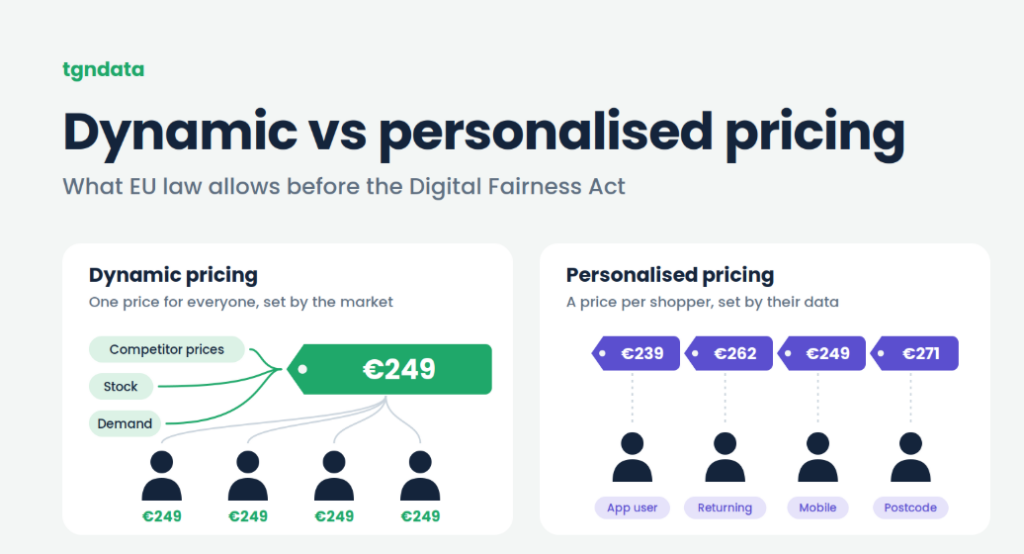
Personalized pricing at the customer level
Autonomous price engines that require minimal human intervention
Hyper localized regional pricing using real time demand and inventory signals
Predictive competitor modeling
Supply chain integrated pricing tuned to cost and capacity
These innovations will push Boxing Day Pricing Strategy toward continuous automation and individualized value delivery.
Boxing Day is one of the most influential retail events of the year, and performance depends on precision. Real-time signals transform pricing from reactive adjustments into proactive profit drivers. Retailers who leverage competitive intelligence, customer behavior analytics, inventory insights, and pricing automation can create a powerful pricing engine that instantly adapts to market dynamics. A well-structured Boxing Day Pricing Strategy protects margin, increases sell-through, improves customer engagement, and strengthens organizational performance.
tgndata empowers retailers with advanced pricing intelligence systems that convert real-time data into operational advantage. Contact us to build a smarter and more profitable Boxing Day Pricing Strategy.
We use cookies to provide you with an optimal experience, for marketing and statistical purposes only with your consent, which you may revoke at any time. Please refer to our Privacy Policy for more information.










Missing an important marketplace?
Send us your request to add it!