
- Product
- Solution for
For Your Industry
- Partners
- Plans & Pricing
- Resources

For Your Industry
Dynamic pricing for seasonal apparel is a response to how fashion retail actually behaves over time. Apparel products are constrained by seasons, weather, and trends, which means their value changes week by week. Static pricing struggles in this environment because it assumes demand remains stable. In reality, pricing decisions must evolve as inventory ages, demand signals clarify, and the season advances.
This article explains dynamic pricing for seasonal apparel through a structured, narrative driven lens, helping retail teams understand how pricing decisions unfold across a season and why timing, data, and governance matter more than constant price movement.

Dynamic pricing for seasonal apparel refers to adjusting prices over time based on demand, inventory exposure, and remaining selling window. It is not continuous price fluctuation, but a controlled method of aligning prices with real market behavior as a season progresses.
Static pricing assumes:
Demand follows forecasted curves
Markdown calendars apply uniformly
Time impact is predictable
Dynamic pricing assumes:
Demand changes unpredictably
Inventory risk grows unevenly
Time reduces pricing power
Dynamic pricing replaces fixed assumptions with observed behavior.
Seasonality is the primary reason apparel pricing behaves differently from other retail categories. Apparel value is tied to relevance, not durability.
A product’s value declines due to:
Weather changes
Trend cycles
Consumer attention shifts
New assortment arrivals
This decline accelerates near the end of the season, increasing pricing urgency.
When time is ignored in pricing decisions, retailers experience:
Overstock accumulation
Delayed markdowns
Margin erosion
Forced clearance events
Dynamic pricing exists to manage this decay proactively.
Dynamic pricing is best understood as a sequence of decisions aligned to different seasonal phases.
Early season pricing focuses on learning, not reacting.
Retailers observe:
Initial sell through
Size and color performance
Channel specific demand
Prices often remain unchanged to protect early margin and avoid false signals.
Mid season is when forecasts give way to reality.
Pricing teams assess:
Weeks of supply by SKU
Demand deviation from plan
Inventory imbalance risk
Controlled price adjustments at this stage can prevent late season margin loss.
Late season pricing prioritizes inventory exit.
Dynamic pricing supports:
Staggered markdowns
Category specific discount depth
Reduced clearance shock
This stage benefits most from earlier pricing discipline.
Dynamic pricing depends on demand signals that reflect real customer behavior rather than assumptions.
Key indicators include:
Sell through velocity
Conversion rate changes
Traffic patterns
Size and color depletion
Regional performance variance
No single signal is sufficient. Value comes from convergence.
Inventory is not just a fulfillment concern. It is a pricing signal.
As inventory ages:
Probability of full price sell through declines
Price elasticity increases
Markdown necessity rises
Dynamic pricing integrates inventory age with remaining selling weeks.
Small adjustments earlier:
Reduce required discount depth later
Improve assortment health
Stabilize margin outcomes
Inventory informed pricing shifts decisions from reactive to preventive.
Price elasticity varies widely across apparel categories and over time.
Elasticity changes based on:
Category type
Brand strength
Trend relevance
Season timing
Product substitutability
Dynamic pricing accounts for these differences rather than assuming uniform behavior.
Understanding elasticity helps retailers:
Avoid over discounting strong items
Target weak demand products more precisely
Preserve perceived value longer
Dynamic pricing fails without trust and structure.
Without governance:
Teams resist price changes
Brand concerns escalate
Decisions feel arbitrary
With governance:
Rules are clear
Accountability is defined
Outcomes are measurable
Communicate intent clearly
Share performance feedback
Treat pricing as a learning process
Dynamic pricing is not a one season solution.
Each season generates insights:
Which categories resisted discounts
Which required early intervention
How demand shifted unexpectedly
Over time, pricing decisions become more confident, less reactive, and more aligned with reality.
Dynamic pricing does not mean:
Constant price fluctuation
Race to the bottom discounting
Loss of brand control
Instead, it means:
Intentional timing
Data informed decisions
Controlled execution
The biggest challenge is timing. Apparel products lose value as seasons change, and pricing decisions must balance early margin capture with late season inventory risk.
There is no fixed rule. Effective pricing changes occur when demand or inventory signals deviate meaningfully from plan, not on a rigid schedule.
When governed properly, dynamic pricing does not harm brands. Problems arise when pricing lacks rules, transparency, or consistency.
No. Smaller retailers can benefit if they focus on a limited set of signals and apply pricing changes selectively.
Basic sell through data, inventory levels, historical pricing, and seasonal calendars are enough to begin.
Most retailers observe improvements within one to two seasons when pricing decisions are applied consistently.
Seasonal apparel retail is shaped by time, uncertainty, and change. Static pricing models assume stability that does not exist. Dynamic pricing acknowledges that conditions evolve and pricing must evolve with them.
When applied with discipline, dynamic pricing helps retailers:
Reduce late season inventory risk
Protect margin where demand allows
Exit inventory with intention rather than urgency
Dynamic pricing for seasonal apparel is not about pricing more often. It is about pricing with better information, at the right moments, for the right reasons.
We use cookies to provide you with an optimal experience, for marketing and statistical purposes only with your consent, which you may revoke at any time. Please refer to our Privacy Policy for more information.
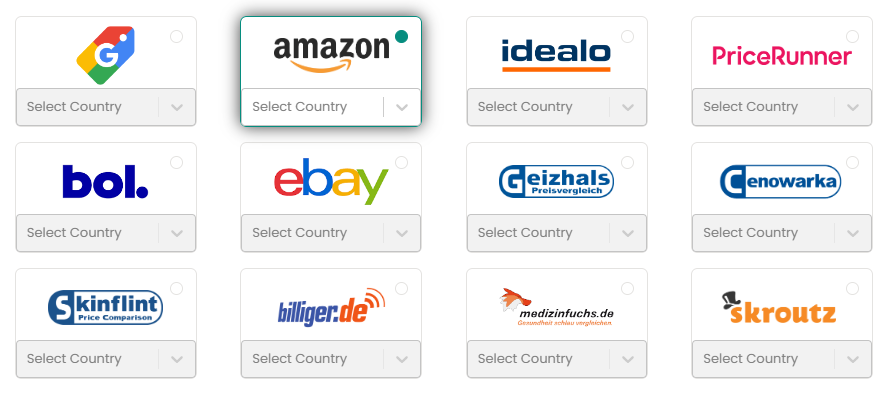










Missing an important marketplace?
Send us your request to add it!