How to Track Competitor Prices Automatically (Step-by-Step)

If you want to track competitor prices effectively, manual methods are no longer enough. Prices change constantly, and without automated competitor price tracking, you risk losing both sales and margin.

If you’re running an ecommerce business, managing a retail brand, or leading pricing strategy, you already know this: pricing moves fast, and missing even a small shift can cost you.
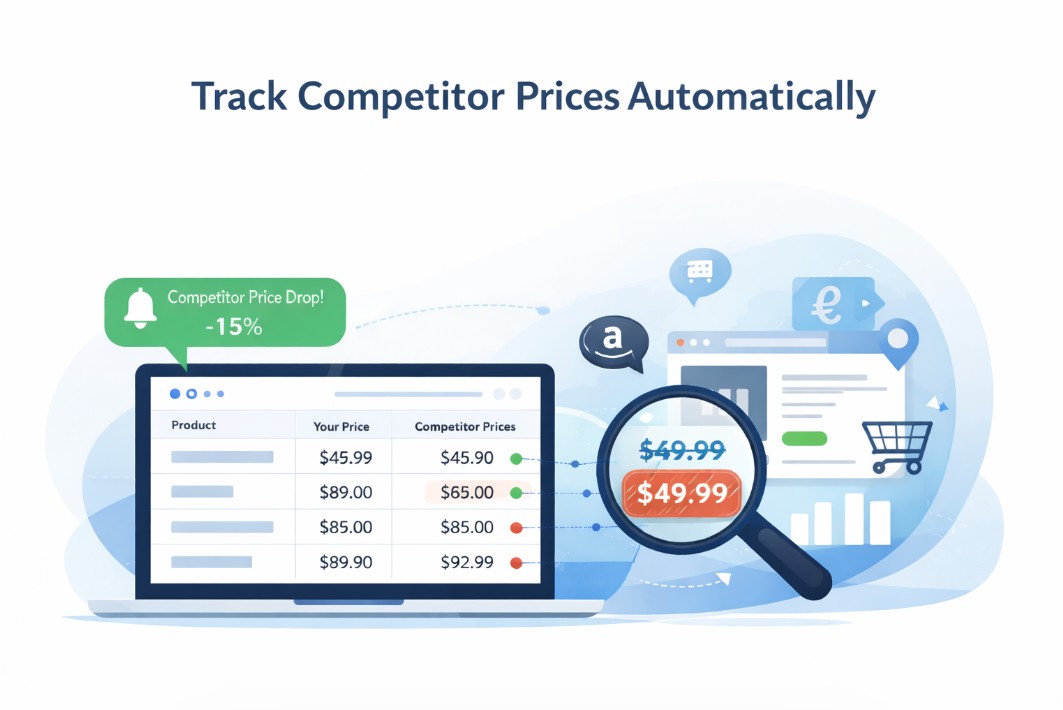
Competitor price tracking dashboard showing automated price comparison and real-time price monitoring

What Is Competitor Price Tracking?

Competitor price tracking is the process of monitoring how competitors price the same or similar products across channels over time.

This includes:

  • Product-level price changes
  • Discounts and promotions
  • Stock availability
  • Marketplace pricing (Amazon, Skroutz, etc.)
  • Regional price variations

When automated, this becomes real-time price intelligence, not just data collection.

Why Manual Tracking Fails

Before jumping into the “how,” it’s important to understand why most teams struggle here.

Manual tracking typically involves:

  • Checking competitor websites
  • Copying prices into spreadsheets
  • Updating periodically

This breaks down because:

  • Prices change multiple times per day
  • Product matching is inconsistent
  • Promotions are missed
  • Data becomes outdated instantly
  • It doesn’t scale beyond a small catalog

Bottom line: Manual tracking gives you snapshots.
Automated tracking gives you continuous visibility.

What Are the Benefits of Price Intelligence Software?

Price intelligence software helps businesses:

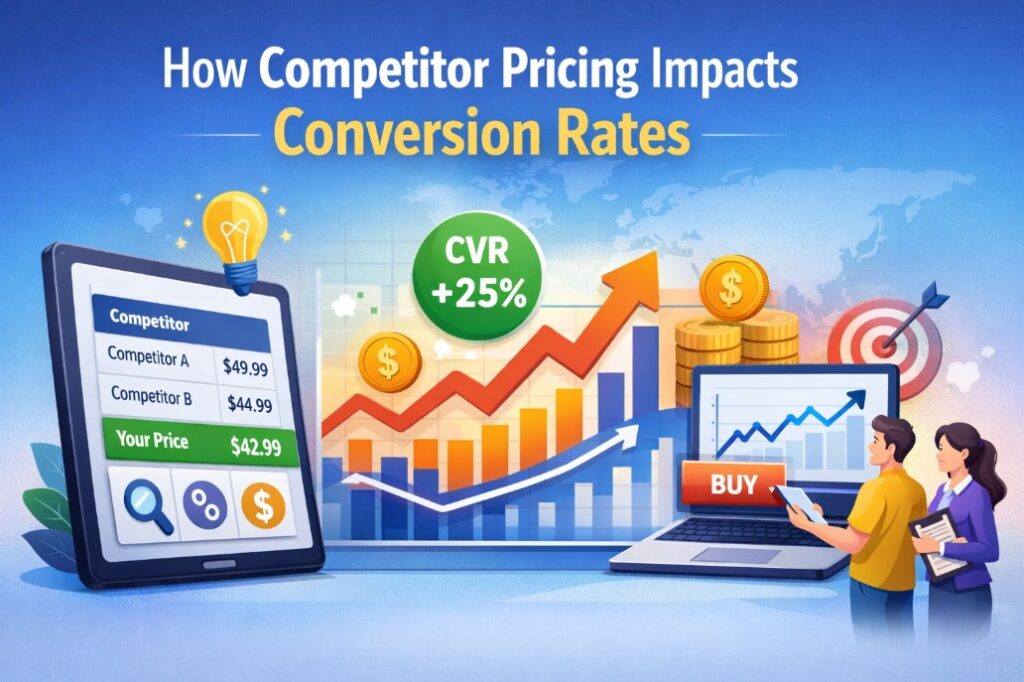
  • Increase conversion rates by staying competitively priced
  • Protect margins by avoiding unnecessary discounts
  • React faster to competitor price changes
  • Scale pricing decisions across large product catalogs
  • Identify market opportunities through pricing gaps

👉 The result: higher revenue and better pricing control.

Step-by-Step: How to Track Competitor Prices Automatically

Step 1: Define Your Competitive Set

Start by identifying who you actually compete with on price.

Break competitors into:

  • Direct competitors (same products or SKUs)
  • Marketplace competitors (Amazon, aggregators)
  • Indirect competitors (similar alternatives)

👉 Focus on competitors that influence:

  • Customer purchase decisions
  • Price perception in your category

Common mistake: Tracking too many competitors instead of the right ones.

Step 2: Identify Products to Track

You don’t need to track everything at once.

Prioritize:

  • Best-selling SKUs
  • High-margin products
  • Price-sensitive categories
  • Products with strong competition

For mature teams:

  • Track entire catalogs
  • Segment by category or pricing strategy

Step 3: Solve Product Matching (Critical Step)

This is where most DIY setups fail.

You need to match:

  • Your product → competitor equivalent

Matching methods:

  • Exact SKU / GTIN / EAN
  • Title + attribute matching
  • AI-based matching (most scalable)

Without accurate matching:

  • You compare the wrong products
  • Pricing decisions become unreliable

Step 4: Choose a Data Collection Method

There are three main approaches:

1. Manual (Not Recommended)

  • No automation
  • Doesn’t scale
  • High error rate

2. Basic Scraping Tools

  • Custom scripts or generic scrapers
  • Requires maintenance
  • Breaks frequently when sites change

3. Price Intelligence Platforms (Recommended)

  • Automated data collection
  • Built-in matching
  • Real-time updates
  • Historical tracking

This is where platforms like tgndata fit:

  • Continuous monitoring across competitors
  • Clean, structured price data
  • Designed for pricing decisions, not raw scraping

Step 5: Set Tracking Frequency

Pricing is dynamic.

Choose frequency based on category:

  • High competition (electronics, fashion): every few hours
  • Medium: daily
  • Low volatility: weekly

Key insight:
If your competitors change prices faster than you track them, you’re already behind.

Step 6: Normalize and Structure the Data

Raw data is useless without structure.

You need:

  • Clean product matching
  • Currency normalization
  • Discount detection
  • Price history tracking

This enables:

  • Trend analysis
  • Price positioning
  • Strategy decisions

Step 7: Analyze Your Price Position

Now the real value begins.

Key metrics:

  • Price index vs competitors
  • % of products cheaper / more expensive
  • Price gaps by category
  • Promotion intensity

Example insights:

  • “We are 12% more expensive on top sellers”
  • “Competitor X is undercutting us on 30% of SKUs”

Step 8: Automate Alerts

You don’t want to stare at dashboards all day.

Set alerts for:

  • Competitor price drops
  • Undercutting events
  • Stock changes
  • New product entries

This turns tracking into actionable intelligence.

Step 9: Connect Insights to Pricing Strategy

This is where most companies fail.

Tracking alone ≠ advantage.

You need to act:

  • Adjust prices dynamically
  • Protect margins on low-competition SKUs
  • Respond to aggressive competitors
  • Align with positioning (premium vs cheapest)

Step 10: Integrate With Your Pricing Workflow

The most advanced setups connect:

  • Price intelligence → pricing engine → execution

This enables:

  • Dynamic pricing
  • Rule-based adjustments
  • Faster reaction times

Common Mistakes to Avoid

1. Tracking Without Strategy

Collecting data without using it.

2. Focusing Only on Lowest Price

Race-to-the-bottom destroys margins.

3. Poor Product Matching

Leads to wrong conclusions.

4. Ignoring Promotions

Discounts often matter more than base price.

5. Delayed Data

Outdated data = bad decisions.

What “Good” Looks Like

A strong competitor price tracking setup gives you:

  • Real-time visibility across competitors
  • Accurate product matching
  • Historical price trends
  • Automated alerts
  • Clear price positioning

And most importantly:

👉 It directly influences pricing decisions and revenue

Where tgndata Fits

Based on its positioning, tgndata operates as a price intelligence and competitive monitoring platform designed for:

  • E-commerce teams
  • Retailers
  • Brands managing pricing strategy

It likely helps teams:

  • Track competitor prices automatically
  • Monitor market positioning
  • Identify pricing opportunities
  • Make faster, data-driven pricing decisions

Positioning advantage to emphasize in content:
Not just “data collection” → but decision-ready pricing intelligence

Frequently Asked Questions

How do I track competitor prices in real time?

By using automated price intelligence tools that continuously collect and update competitor pricing data.

Yes, but it doesn’t scale and quickly becomes inaccurate.

Ideally multiple times per day in competitive markets.

It depends on your needs, but platforms like tgndata are designed specifically for ecommerce pricing intelligence and automation.

Final Takeaway

Competitor price tracking is no longer optional.

If you’re not doing it automatically:

  • You’re reacting too late
  • You’re missing opportunities
  • You’re risking margin loss

The companies winning on pricing today are not guessing.

They’re operating on real-time price intelligence.
Table of Contents

Most Recent Articles

Increase Revenue with Smarter, Real-Time Pricing

Track competitors, optimize pricing decisions, and protect your margins all in one platform.

Make faster pricing decisions and stay competitive without manual work.

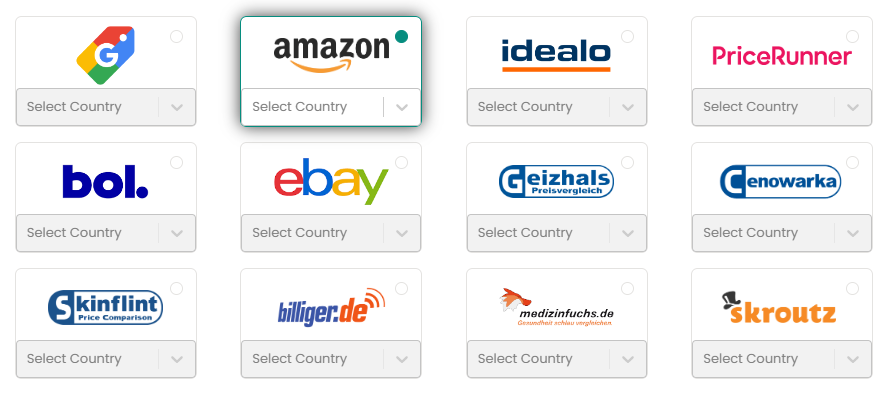
Monitor any major Sales Channel
in any country !

Missing an important marketplace?
Send us your request to add it!