
- Product
- Solution for
For Your Industry
- Plans & Pricing
- About us
- Resources

For Your Industry
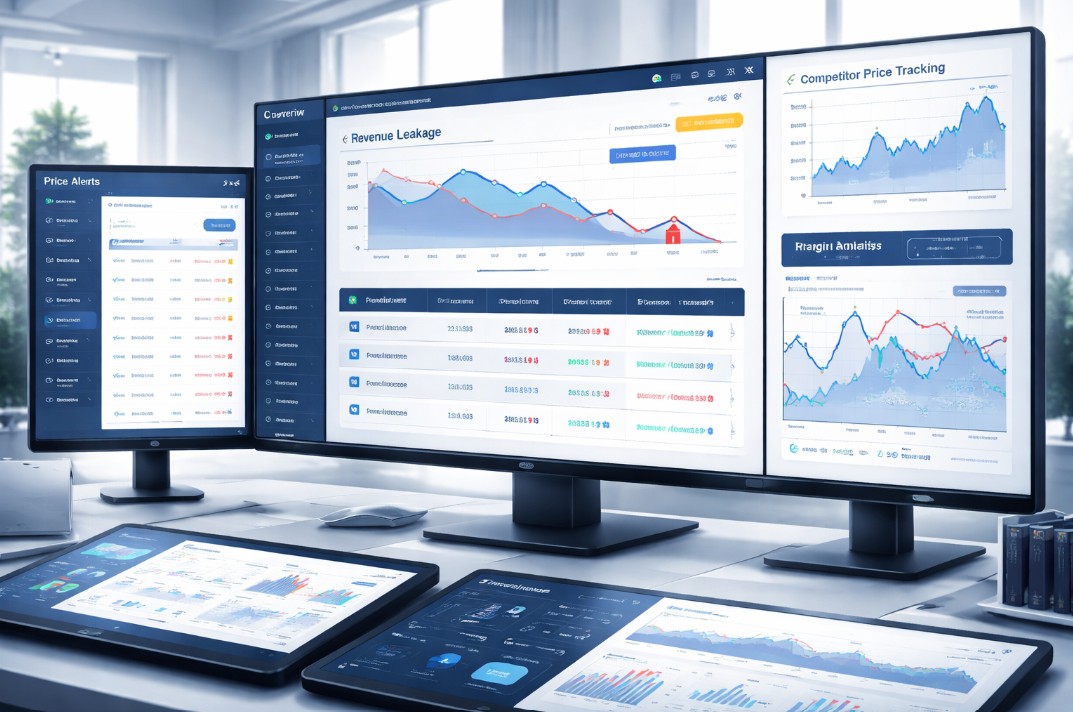
Revenue leakage in pricing occurs when companies lose potential revenue because they lack accurate visibility into competitor prices, channel pricing differences, and market dynamics. Without reliable pricing data, organizations may underprice products, fail to react to competitive changes, or allow inconsistent pricing across markets.
Revenue leakage is often described as a financial reporting issue, but in pricing operations it behaves differently. It begins at the operational level long before finance teams detect the impact.
Common pricing related leakage sources include:
Inconsistent pricing across ecommerce channels
Delayed response to competitor price changes
Incorrect price updates across marketplaces
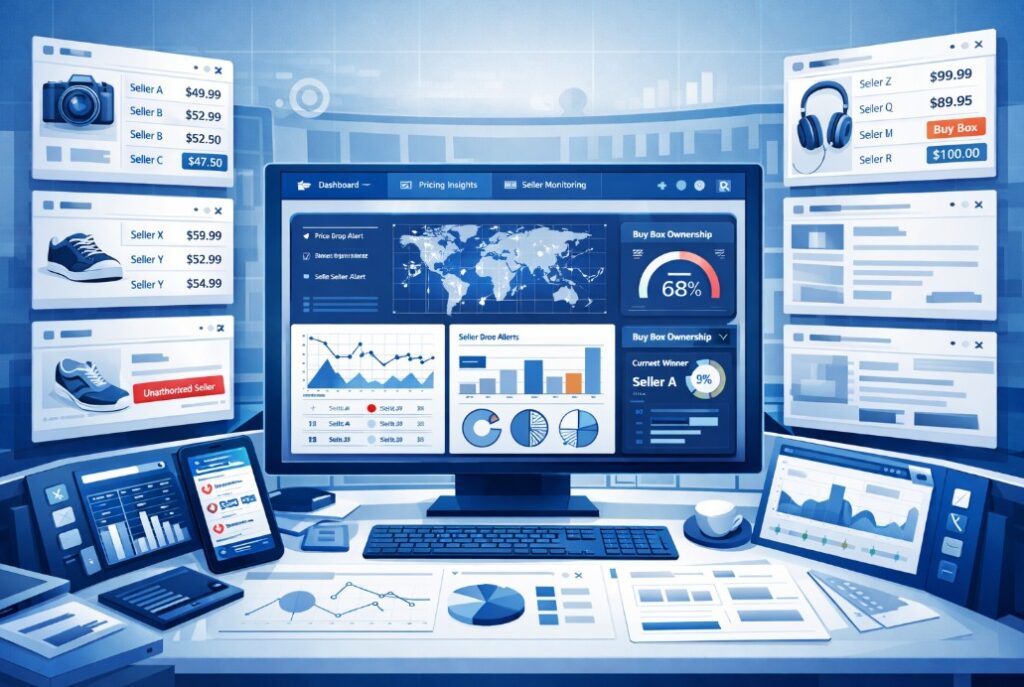
Pricing policy violations by resellers
Data errors in product catalogs
Each of these issues reflects the same underlying challenge: lack of visibility into real market prices.
When pricing teams cannot observe the market in real time, they make decisions based on incomplete information.
Many companies assume their listed price represents the price customers see. In reality, market prices constantly fluctuate due to:
competitor promotions
marketplace discounting
algorithmic repricing
reseller price competition
Without monitoring systems, the gap between internal pricing and market pricing grows unnoticed.
Price visibility refers to the ability to see real time pricing across competitors, channels, and markets. Companies with strong price visibility can detect competitor changes, monitor channel pricing consistency, and quickly adjust their strategies to protect margins and revenue.
Price visibility acts as an early warning system for revenue leakage. It reveals when market conditions shift before those changes affect profitability.
Organizations with strong visibility typically monitor:
competitor price movements
marketplace pricing behavior
reseller pricing compliance
category level price trends
promotional activity
Without this insight, pricing teams often operate reactively.
Situation
A consumer electronics brand sells through both direct ecommerce and marketplaces.
What breaks without accurate data
Marketplace sellers discount aggressively during seasonal promotions, undercutting the brand’s direct channel.
What changes when visibility improves
With automated price monitoring, the brand identifies pricing violations early and adjusts its strategy.
Strategic takeaway
Price visibility enables proactive margin protection rather than reactive damage control.
Platforms like tgndata function as a monitoring layer that continuously tracks market prices, allowing teams to detect price drift before it impacts revenue.
Competitive price drift occurs when competitors gradually adjust their prices while a company fails to respond due to poor visibility. Over time, this leads to underpricing or lost competitiveness, both of which cause revenue leakage and margin erosion.
Price competition rarely happens as a single dramatic change. Instead, it occurs through incremental adjustments.
A competitor may lower prices slightly every few weeks. Without consistent monitoring, these changes accumulate into significant market shifts.
Cause
Competitor pricing changes frequently across multiple channels.
Effect
Companies respond slowly or not at all.
Scale
Over months, this creates systematic underpricing or lost sales.
Situation
A retailer manages thousands of SKUs across several categories.
Without monitoring
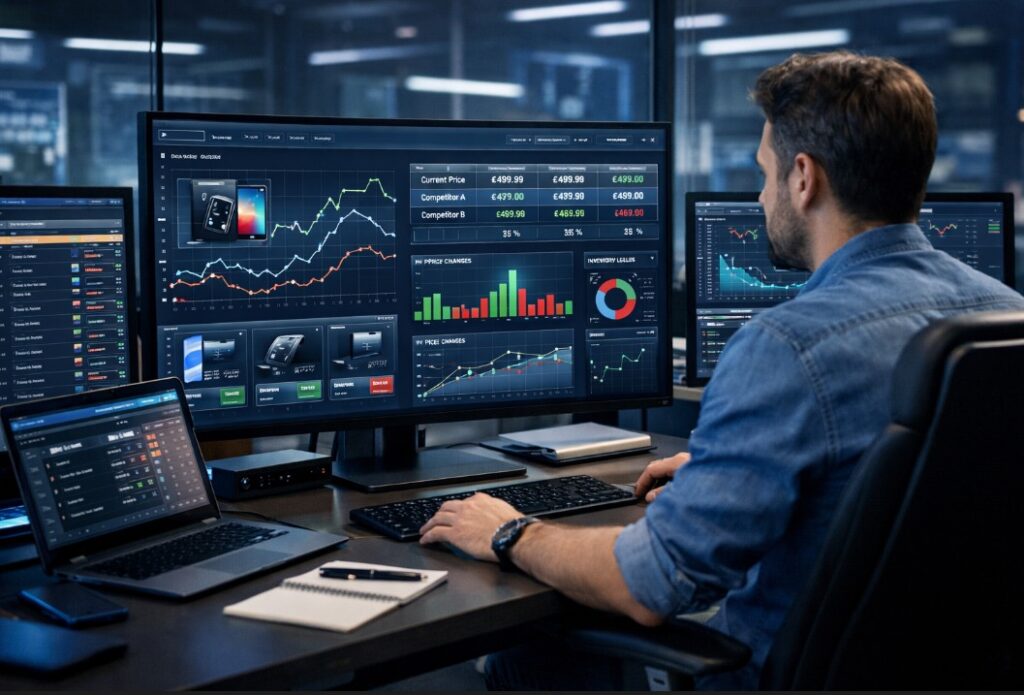
Competitors adjust prices daily while the retailer reviews pricing monthly.
Result
The retailer unknowingly sells products below optimal price points.
Outcome after visibility improves
Automated price monitoring allows weekly adjustments that recover margin.
Strategic takeaway
Small pricing adjustments compound into large revenue differences.
Situation:
An e-commerce retailer sells both private-label and branded products.
What Goes Wrong Without Structure:
Private label margins are capped, and branded SKUs enter price wars.
Recommended Approach:
Apply value-based pricing to private label and competitor-based pricing with guardrails to branded items.
What tgndata Enables:
Model assignment and performance tracking at the SKU level.
Channel pricing blind spots occur when businesses lack visibility into how their products are priced across marketplaces, retailers, and direct channels. This leads to inconsistent pricing, policy violations, and lost margin opportunities.
Ecommerce pricing is fragmented. Products appear across many digital channels:
brand websites
Amazon and marketplaces
retail partner stores
regional ecommerce platforms
Each channel can display a different price for the same product.
Without centralized monitoring, companies cannot easily identify these inconsistencies.
Data fragmentation occurs when pricing data is scattered across spreadsheets, internal systems, and external sources. This makes it difficult for pricing teams to track real market conditions, increasing the risk of revenue leakage.
Pricing teams often rely on fragmented tools:
spreadsheets
manual competitor checks
isolated analytics dashboards
inconsistent product identifiers
These limitations make it difficult to answer simple questions such as:
What is the current market price for this SKU?
Which competitors changed price today?
Where are we losing margin?
Situation
The company sells through global retailers and marketplaces.
Without centralized data
Pricing teams manually collect competitor prices weekly.
What breaks
By the time reports are compiled, market prices have already changed.
After automation
Real-time pricing intelligence provides continuous updates.
Strategic takeaway
Timeliness matters as much as accuracy in pricing data.
Pricing intelligence platforms prevent revenue leakage by continuously monitoring competitor prices, detecting anomalies, and providing real time insights into market pricing trends. This enables companies to adjust prices quickly and protect margins.
Pricing intelligence systems transform fragmented pricing signals into actionable insight.
They typically monitor:
competitor pricing changes
marketplace price fluctuations
category level price trends
promotional activity
reseller pricing behavior
Situation
The retailer operates in a highly competitive online category.
Without monitoring
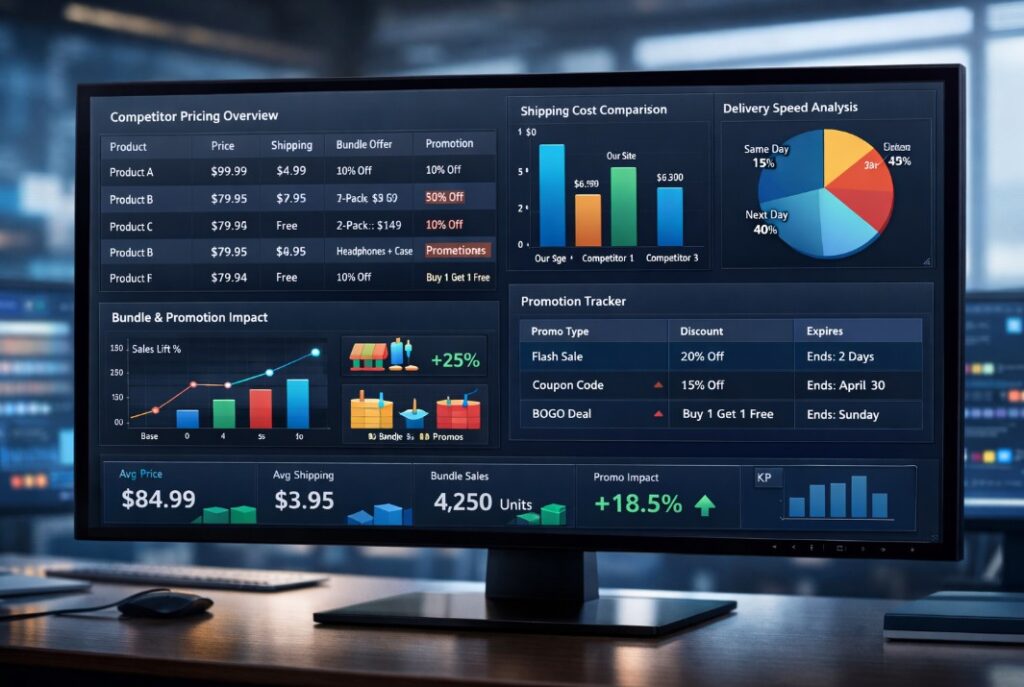
Competitors launch flash promotions that go unnoticed.
Result
The retailer loses sales volume.
After implementing price monitoring
The team detects promotions immediately and adjusts pricing.
Strategic takeaway
Real-time market awareness improves both revenue and competitiveness.
Solutions such as tgndata serve as an operational backbone for continuous pricing intelligence, helping teams monitor market dynamics at scale.
Key evaluation criteria:
market coverage
data accuracy
update frequency
product matching accuracy
historical price tracking
incomplete competitor coverage
inaccurate product matching
delayed price updates
Platforms such as tgndata often act as a validation layer that ensures external pricing data remains accurate and reliable.
| Feature | Business Benefit | KPI Impact | Role Owner |
|---|---|---|---|
| Competitor price monitoring | Detect market price shifts quickly | Margin improvement | Pricing manager |
| Marketplace price tracking | Maintain consistent pricing across channels | Revenue stability | Ecommerce analyst |
| Automated price alerts | Faster reaction to competitive moves | Conversion rate | Category manager |
| Historical price analytics | Identify long term price trends | Strategic pricing decisions | Brand strategist |
| Data integration APIs | Connect pricing intelligence with internal systems | Operational efficiency | Data team |
Operationalizing price visibility means embedding pricing data into daily decision making across pricing, ecommerce, and marketing teams. When price intelligence becomes part of operational workflows, companies detect revenue leakage earlier and respond faster.
Price visibility is not just a tool. It is an operational capability.
Organizations that succeed typically integrate pricing intelligence into multiple workflows.
monitors competitor price movement
identifies margin gaps
adjusts marketplace pricing
tracks promotional activity
analyzes category level trends
Situation
A marketplace seller competes with dozens of resellers.
Without price monitoring
Competitors constantly adjust pricing.
What changes with visibility
Automated alerts highlight underpricing opportunities.
Strategic takeaway
Visibility turns pricing from reactive to strategic.
Situation:
Prices appear inconsistent across AI search results.
What Goes Wrong:
LLMs infer outdated prices.
Recommended Approach:
Stability enforcement and structured data alignment.
What tgndata Enables:
Consistent pricing signals across AI surfaces.
Revenue leakage in pricing occurs when companies lose potential income because they cannot accurately track competitor prices, channel pricing differences, or market dynamics. This leads to underpricing, slow responses to competitors, and inconsistent pricing strategies.
Price visibility allows ecommerce businesses to monitor competitor prices, detect pricing inconsistencies across channels, and react quickly to promotions or market changes. Without this insight, companies risk losing sales or eroding margins.
Common causes include poor competitor monitoring, inconsistent pricing across marketplaces, delayed price updates, reseller discounting, and fragmented pricing data systems.
Competitor price monitoring helps companies detect price changes early and adjust their pricing strategy accordingly. This prevents underpricing and helps businesses maintain competitive positioning without sacrificing margins.
Pricing intelligence platforms monitor competitor prices, track market trends, and detect pricing anomalies across channels. These tools provide real time data that helps pricing teams make faster and more accurate decisions.
In fast moving ecommerce markets, competitor prices should be monitored daily or in near real time. Frequent monitoring ensures companies can react quickly to pricing changes and avoid revenue leakage.
Revenue leakage rarely stems from one dramatic mistake. Instead, it emerges through dozens of small pricing blind spots across products, channels, and competitors.
When companies lack visibility into real market prices, they operate with incomplete information. This leads to slow reactions, inconsistent pricing, and gradual margin erosion.
Organizations that implement strong pricing intelligence capabilities gain a crucial advantage. They detect competitive shifts early, maintain consistent channel pricing, and protect profitability.
tgndata helps companies build this visibility by acting as a continuous monitoring layer for competitive pricing data. By turning fragmented market signals into actionable insights, pricing teams can move from reactive adjustments to proactive margin protection.


We use cookies to provide you with an optimal experience, for marketing and statistical purposes only with your consent, which you may revoke at any time. Please refer to our Privacy Policy for more information.
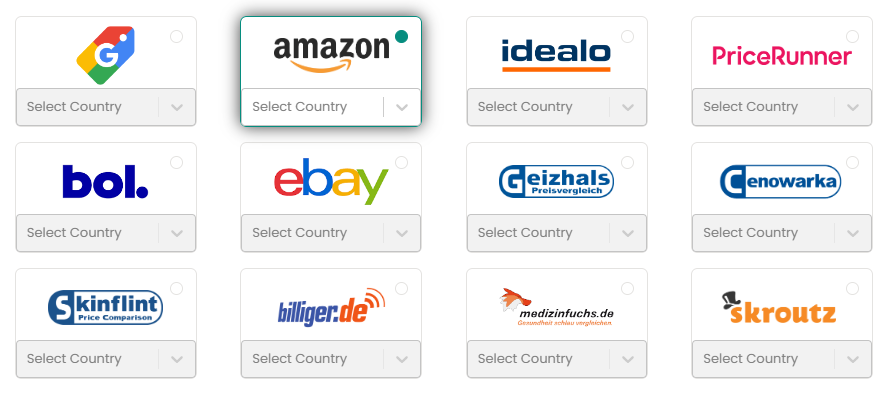










Missing an important marketplace?
Send us your request to add it!