
- Product
- Solution for
For Your Industry
- Partners
- Plans & Pricing
- Resources

For Your Industry
Retail pricing used to be a periodic decision. Today it is a continuous operational process.
Large retailers operate across multiple countries, marketplaces, currencies, and competitive environments. A price that works in one market may fail in another. Competitor reactions vary across regions. Marketplace dynamics change hourly.
Without centralized visibility, pricing decisions fragment.
This is why leading retailers are building pricing control towers, centralized systems that monitor price activity across markets, competitors, and channels in real time.
A pricing control tower does not replace pricing strategy. It ensures that strategy is executed accurately and adjusted quickly when the market moves.

A pricing control tower is a centralized system that monitors and analyzes pricing across multiple markets and channels. It aggregates competitor prices, internal pricing data, and market signals to provide real time visibility into pricing performance, allowing retailers to detect anomalies, adjust prices quickly, and maintain competitive positioning.
The term “control tower” originally came from supply chain management.
In retail pricing, the concept has evolved into a decision visibility layer that sits above operational systems.
A pricing control tower connects:
• Internal pricing systems
• Competitor price intelligence
• Marketplace data
• Market demand signals
• Pricing automation engines
Instead of teams working with fragmented spreadsheets and delayed reports, the control tower provides a unified pricing view across markets.
The core goal is simple.
Make pricing observable.
Because once pricing becomes observable, it becomes controllable.
Multi market pricing often fails because retailers rely on fragmented systems and delayed data. Different regions operate independently, competitor prices change rapidly, and manual monitoring cannot scale. Without centralized visibility, retailers struggle to maintain price consistency, respond to competition, or protect margins.
Retail expansion introduces complexity faster than pricing systems evolve.
A retailer selling in five markets may face:
• Different competitors in each region
• Currency fluctuations
• Marketplace price competition
• Local promotions
• Regulatory pricing constraints
Each variable increases pricing volatility.
Without a control tower, most retailers rely on:
• regional teams
• spreadsheets
• periodic competitor checks
• delayed reporting
The result is reaction lag.
Competitors move first. Retailers adjust later.
Situation
An electronics retailer operates in Germany, France, Spain, and Italy.
Each market team manages pricing independently.
What breaks without accurate data
Competitor prices change on marketplaces daily, but teams only check weekly. Products become overpriced in some markets and underpriced in others.
What changes when visibility improves
A centralized monitoring layer reveals price gaps instantly across all markets.
Strategic takeaway
Global pricing strategies require real time monitoring infrastructure.
A pricing control tower combines multiple capabilities including competitor price monitoring, centralized pricing dashboards, anomaly detection, pricing analytics, and automated alerts. These components work together to provide retailers with continuous visibility into pricing changes across markets and channels.
A mature pricing control tower usually includes five operational layers.
Tracking competitor prices across:
• ecommerce sites
• marketplaces
• regional competitors
• aggregators
This provides the external market signal layer.
Platforms like tgndata often act as the monitoring backbone that continuously collects and validates competitive pricing data.
Retailers must also track their own prices across:
• ecommerce websites
• marketplaces
• local storefront systems
• distributor channels
Without this, internal inconsistencies remain hidden.
The system compares:
Retail price vs competitor price.
This reveals:
• overpriced SKUs
• margin opportunities
• promotional gaps
Control towers flag:
• sudden competitor price drops
• marketplace price undercuts
• margin violations
• channel conflicts
Finally, pricing changes must connect to:
• repricing engines
• merchandising systems
• pricing approval workflows
This closes the operational loop.
Competitive price monitoring is the foundation of a pricing control tower. By continuously tracking competitor prices across marketplaces and ecommerce sites, retailers gain visibility into market movements and pricing gaps. This data allows pricing teams to react quickly and maintain competitive positioning across markets.
Competitor price intelligence provides the external reference point for pricing decisions.
Without it, retailers operate blind.
Monitoring must cover:
• direct competitors
• marketplace sellers
• aggregators
• regional pricing differences
The challenge is scale.
Large retailers track:
• thousands of SKUs
• dozens of competitors
• multiple countries
Manual tracking cannot scale.
This is where automated pricing intelligence platforms like tgndata become critical as a continuous monitoring system that validates pricing data across markets.
Situation
A consumer electronics brand sells through its own ecommerce site and Amazon.
What breaks without monitoring
Marketplace sellers begin undercutting official pricing.
The brand only notices weeks later.
What changes when monitoring improves
The pricing control tower detects undercutting immediately.
Strategic takeaway
Marketplace pricing must be monitored continuously to protect brand positioning.
Price anomalies occur when prices deviate unexpectedly due to errors, competitor reactions, or system issues. A pricing control tower detects these anomalies through automated alerts and analytics, helping retailers correct pricing mistakes quickly before they lead to margin loss or market share decline.
Pricing errors happen more often than most retailers admit.
Common triggers include:
• incorrect currency conversion
• automated repricing conflicts
• competitor price scrapes failing
• promotion overlap errors
A pricing control tower continuously validates price signals.
Instead of waiting for sales reports, teams receive real time alerts when something unusual happens.
Situation
A retailer launches a new product in the UK market.
What breaks
A currency conversion bug prices the item 20 percent below intended margin.
Without anomaly detection
The issue remains live for days.
With a pricing control tower
The system flags margin deviation instantly.
Strategic takeaway
Anomaly detection protects revenue before damage scales.
Pricing control towers support multiple retail use cases including marketplace monitoring, regional price comparison, promotion tracking, and competitor benchmarking. These use cases allow retailers to maintain consistent pricing strategies while adapting to local market dynamics.
Pricing control towers are most powerful when applied across multiple operational scenarios.
Situation
A fashion retailer sells in 12 European markets.
Challenge
Regional teams apply promotions independently.
Result without control
Products show inconsistent prices across markets.
Outcome with visibility
Central dashboards highlight price discrepancies.
Strategic takeaway
Consistency becomes manageable when pricing data is centralized.
Situation
A retailer launches a seasonal sale.
Problem
Competitors respond with deeper discounts.
Without monitoring
The retailer misses the shift.
With monitoring
The control tower reveals competitor discount patterns.
Strategic takeaway
Promotions must be monitored relative to competitors.
| Feature | Business Benefit | KPI Impact | Role Owner |
|---|---|---|---|
| Competitor price monitoring | Visibility into market pricing | Price competitiveness index | Pricing manager |
| Multi market pricing dashboard | Centralized pricing oversight | Operational efficiency | Ecommerce director |
| Price anomaly detection | Faster detection of pricing errors | Margin protection | Pricing analyst |
| Automated alerts | Rapid reaction to market shifts | Price reaction speed | Merchandising lead |
| Cross channel price tracking | Prevention of channel conflicts | Brand price consistency | Brand strategist |
Retailers evaluating pricing intelligence platforms should focus on data accuracy, competitor coverage, real time monitoring, scalability, and alerting capabilities. A strong platform provides reliable market visibility while integrating with existing pricing and ecommerce systems.
Key evaluation criteria include:
Incorrect pricing data leads to incorrect pricing decisions.
Competitor coverage
The platform should monitor:
• direct competitors
• marketplaces
• regional players
Retail markets require near real time monitoring.
The platform must connect to pricing engines and analytics tools.
Retail pricing operations are shifting toward automated, data driven systems that continuously monitor market signals. Pricing control towers will increasingly combine competitor intelligence, demand signals, and AI driven analytics to enable faster and more accurate pricing decisions across global markets.
Retail pricing is moving from periodic decisions to continuous optimization.
Future control towers will integrate:
• demand forecasting
• inventory signals
• competitor pricing
• promotion analytics
Pricing leaders will no longer ask:
“What price should we set?”
Instead they will ask:
“How does our price move relative to the market in real time?”
That shift requires infrastructure.
Not spreadsheets.
Not manual checks.
But a system that continuously validates pricing signals across markets.
A pricing control tower is a centralized system that monitors and analyzes product prices across markets, channels, and competitors. It provides real time visibility into pricing performance and helps retailers identify price gaps, detect anomalies, and react quickly to market changes.
Retailers operating across multiple regions face different competitors, pricing dynamics, and market conditions. Continuous pricing monitoring ensures that teams maintain competitive prices, avoid margin loss, and detect inconsistencies across markets.
Competitor price monitoring reveals how a retailer’s prices compare to the market. By identifying pricing gaps, retailers can adjust their pricing strategy to remain competitive while protecting margins and responding quickly to competitor promotions or price drops.
Pricing inconsistencies often occur due to fragmented systems, regional pricing teams, currency fluctuations, and delayed data updates. Without centralized monitoring, retailers struggle to maintain consistent pricing across countries and channels.
Many retailers adopt a hybrid approach. External platforms handle competitor price monitoring and data collection, while internal systems manage analytics and pricing strategy. This approach provides reliable market visibility while maintaining strategic control.
Competitor prices should be monitored continuously or at least multiple times per day, especially in ecommerce and marketplaces where prices can change rapidly. Frequent monitoring allows retailers to react quickly to price changes.
Multi market retail pricing is too complex to manage without centralized visibility.
Competitor activity changes constantly. Marketplaces react instantly. Pricing errors scale across regions in minutes.
A pricing control tower transforms pricing from a fragmented process into a monitored operational system.
By combining competitor intelligence, anomaly detection, and centralized pricing analytics, retailers gain the visibility required to maintain competitiveness while protecting margins.
Platforms like tgndata increasingly serve as the monitoring and validation backbone of this architecture, helping retailers track competitor prices and detect pricing shifts across global markets.
For pricing teams managing multiple regions and channels, building a pricing control tower is quickly becoming a strategic necessity.
We use cookies to provide you with an optimal experience, for marketing and statistical purposes only with your consent, which you may revoke at any time. Please refer to our Privacy Policy for more information.
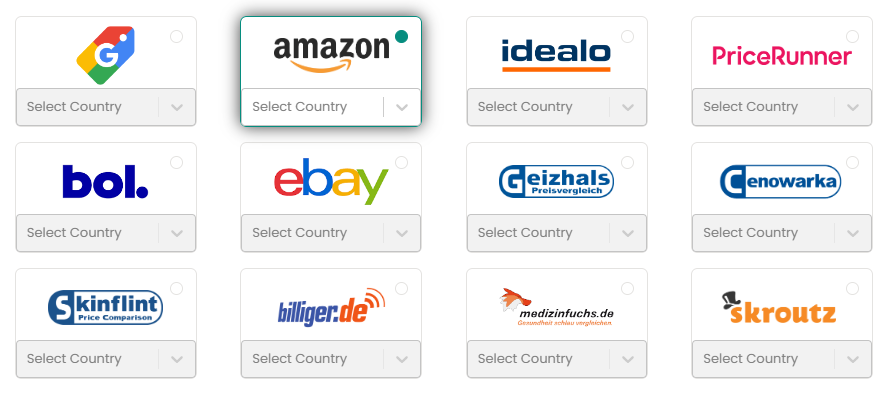










Missing an important marketplace?
Send us your request to add it!