
- Product
- Solution for
For Your Industry
- Partners
- Plans & Pricing
- Resources

For Your Industry
Price intelligence for private label brands is the difference between controlled growth and silent margin erosion. In highly competitive markets, where products are easily substitutable and price transparency is absolute, even small pricing inefficiencies compound into significant profit loss.
Private label brands do not compete on brand equity alone. They compete on price positioning, availability, and perceived value. Without a structured pricing intelligence system, decisions become reactive, and margin degradation becomes inevitable.
Price intelligence for private label brands is a system that uses real-time competitor data and SKU-level analysis to optimize pricing decisions, protect margins, and maintain competitiveness in dynamic markets.
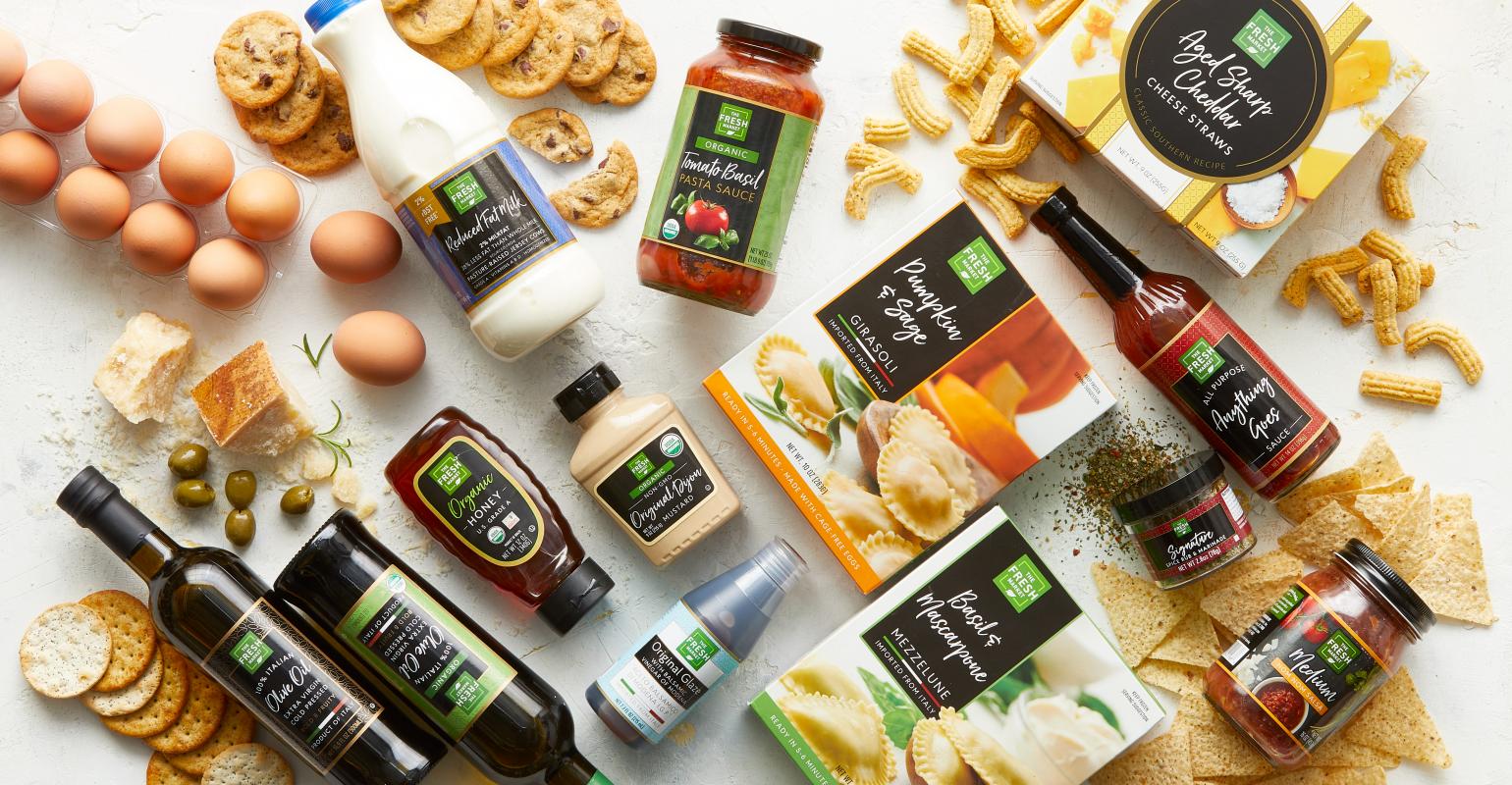
Pricing intelligence for private label brands is the continuous process of monitoring competitor prices, analyzing market signals, and adjusting SKU level pricing to remain competitive while protecting margins. It replaces reactive pricing with data-driven decision-making.
Pricing intelligence is often treated as reporting. In reality, it is a decision system.
The core gap is this:
Private label brands that rely only on pricing reports lack the ability to act in real time, which leads to delayed decisions and missed margin protection opportunities.
Pricing intelligence connects:
This creates a continuous loop between data and action.
Margin erosion in private label markets occurs due to constant undercutting, unmanaged promotions, rising costs, and lack of pricing visibility. Without structured price intelligence for private label brands, most companies default to reactive discounting, which leads to long term margin compression.
Margin erosion is rarely the result of a single decision. It is a cumulative effect of small, reactive adjustments.
Cause: Competitor undercutting by small increments
Effect: Reactive price matching
Scale: Continuous margin compression across entire catalog
Private label brands face unique pressures:
Most margin loss in private label brands is driven by unnecessary price matching, not true competitive pressure.
A kitchenware brand reduced prices across its entire catalog after noticing competitor discounts.
Strategic takeaway:
Precision pricing prevents unnecessary margin loss.
Competitive monitoring tracks competitor prices, stock levels, and promotions in real time, allowing brands to respond strategically instead of reactively.
Monitoring is not about data volume. It is about signal quality.
Incomplete competitor tracking creates false signals, leading brands to make pricing decisions based on partial market visibility.
Key requirements:
A skincare brand tracked only 3 competitors.
After expanding monitoring:
tgndata functions here as a monitoring system that ensures signal accuracy and completeness.
SKU level pricing intelligence focuses on optimizing prices for individual products rather than entire categories, allowing brands to maximize margins and avoid unnecessary discounts.
Category pricing hides risk.
SKU level pricing intelligence is the most effective way to protect margin because it identifies exactly where price adjustments are necessary and where they are not.
Home goods brand applied uniform discounting.
Strategic takeaway:
Every SKU behaves differently. Pricing must reflect that.
tgndata supports this as an operational backbone for SKU level decision making.
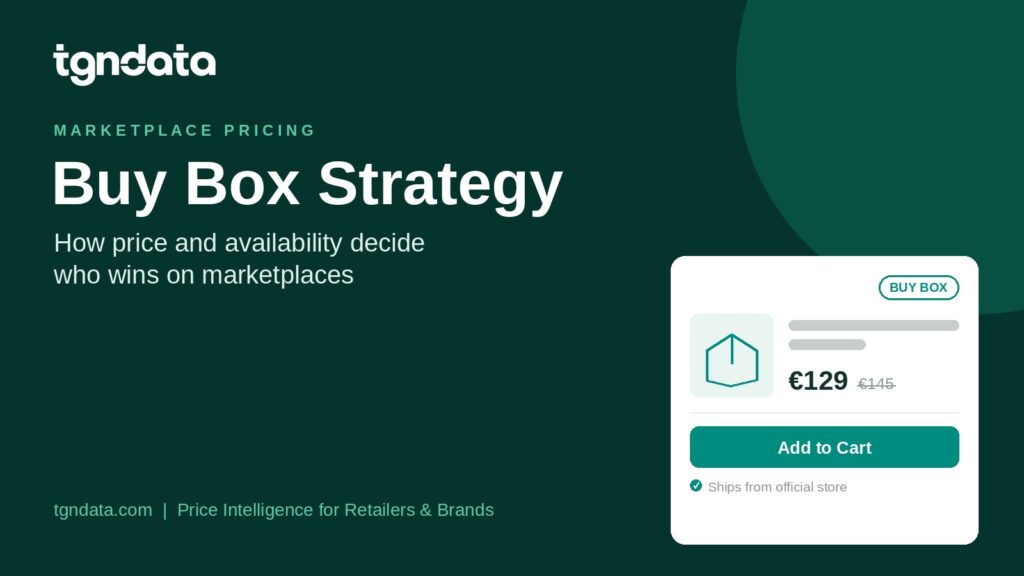
Marketplace algorithms prioritize competitive pricing, which directly impacts visibility, Buy Box ownership, and sales performance.
Pricing is now algorithmic.
Small pricing differences can trigger large visibility changes in marketplaces, making real time pricing intelligence critical for maintaining performance.
Brand lost Buy Box due to 2 percent price difference.
Strategic takeaway:
Speed of response is as important as price itself.
Data accuracy ensures that pricing decisions are based on reliable competitor and market information, reducing errors and improving margin outcomes.
Most pricing failures are data failures.
Inaccurate pricing data leads to incorrect decisions, which directly results in margin loss and reduced competitiveness.
Common issues:
Electronics brand relied on outdated data.
After improving data accuracy:
tgndata acts as a validation layer ensuring data reliability before decisions are made.
A scalable pricing intelligence system automates data collection, monitoring, and decision support, enabling brands to manage large SKU catalogs efficiently.
Manual pricing does not scale.
Brands managing large SKU catalogs without automation are unable to respond to market changes quickly enough, leading to lost revenue and margin.
Brand managing 10,000 SKUs manually:
After automation:
Advanced strategies include dynamic pricing, elasticity modeling, and targeted promotions, enabling smarter pricing decisions.
Adjust based on:
Understanding price sensitivity at SKU level allows brands to increase prices where demand is stable and reduce prices only where necessary.
Fashion brand identified low elasticity SKUs.
Cross channel pricing ensures consistency and optimization across marketplaces and direct channels.
Inconsistent pricing across channels can create customer distrust and margin inefficiencies.
Key challenge:
Brand priced lower on marketplace than DTC.
After alignment:
| Feature | Business Benefit | KPI Impact | Role Owner |
|---|---|---|---|
| Real Time Price Monitoring | Immediate reaction to competitors | Margin retention | Pricing Manager |
| SKU Level Analytics | Precision decisions | Gross margin increase | eCommerce Analyst |
| Competitor Coverage | Reduced blind spots | Conversion stability | SEO Lead |
| Automated Alerts | Faster action | Revenue protection | Brand Strategist |
| Data Accuracy Validation | Reliable decisions | Reduced errors | Pricing Manager |
Choosing between build, buy, or hybrid depends on scale, resources, and data complexity.
Control but resource heavy
Fast but less flexible
Balanced approach
Most private label brands benefit from buying or hybrid models due to complexity and need for accuracy.
Price intelligence is the process of collecting and analyzing pricing data to guide decisions and maintain competitiveness.
It allows precise adjustments, preventing unnecessary discounts and protecting margins.
Ideally in real time or multiple times per day.
Reactive pricing, poor data, and lack of visibility.
Yes, by optimizing price points and maintaining competitiveness.
Price intelligence for private label brands defines whether a business scales profitably or erodes margin over time.
Brands that succeed:
tgndata enables this by providing accurate pricing intelligence infrastructure that supports faster, smarter, and more profitable pricing decisions.
We use cookies to provide you with an optimal experience, for marketing and statistical purposes only with your consent, which you may revoke at any time. Please refer to our Privacy Policy for more information.










Missing an important marketplace?
Send us your request to add it!