
- Product
- Solution for
For Your Industry
- Partners
- Plans & Pricing
- Resources

For Your Industry
Price intelligence is worth it when pricing decisions affect revenue, margin, stock movement, or competitive position. For ecommerce retailers, brands, and distributors, the ROI usually comes from four areas: better margin control, faster competitor response, fewer manual pricing tasks, and smarter promotional decisions.
tgndata fits this category as a price monitoring, competitive intelligence, and dynamic pricing platform for ecommerce businesses, with capabilities including competitor price tracking, benchmarking, market data analysis, dashboards, alerts, historical data, and dynamic pricing rules.
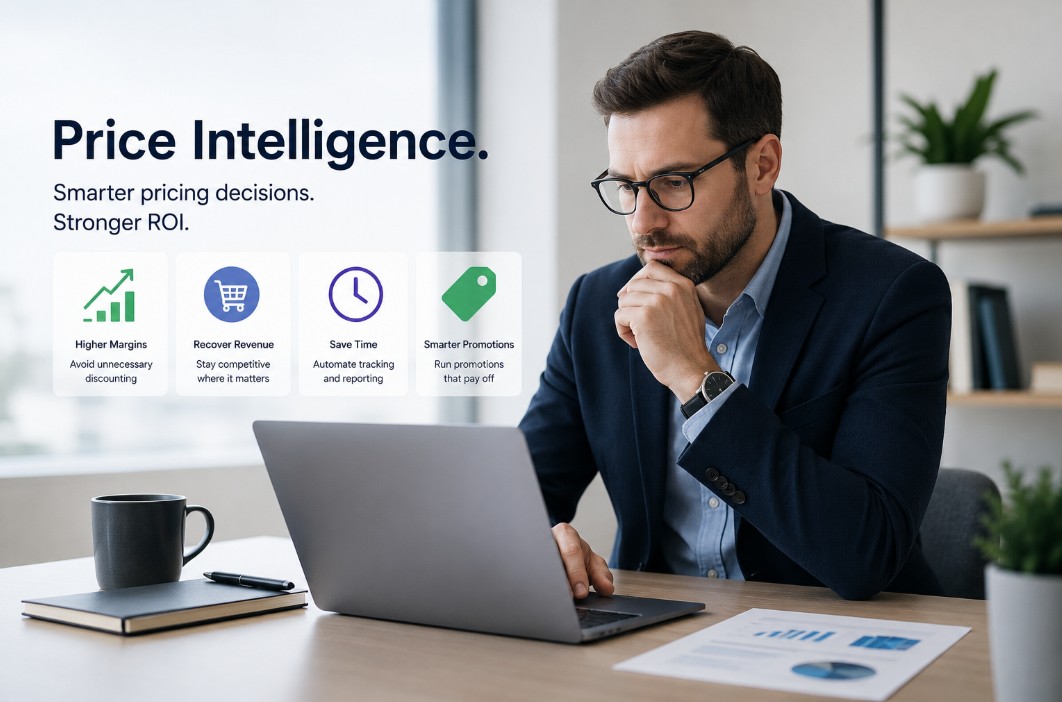
Price intelligence is the process of collecting, matching, analyzing, and using competitor pricing data to make better pricing decisions.
A price intelligence platform typically helps businesses monitor:
For ecommerce teams, this replaces slow spreadsheet work with automated, structured market visibility.
Without reliable competitor data, many teams lower prices too aggressively. That can win short-term sales while damaging profitability.
Price intelligence helps teams identify where they are overpriced, underpriced, or unnecessarily discounting. The strongest ROI often comes not from lowering prices, but from knowing where prices can safely stay higher.
Example:
If a retailer sells 10,000 units per month and improves average gross margin by just €1 per unit through better pricing discipline, that is €10,000 in monthly margin impact.
If products are consistently priced above the market, customers may leave before converting. Price intelligence helps detect these gaps quickly.
This matters most for:
A pricing team can then decide whether to match, beat, hold, or reposition the price based on margin and stock strategy.
Manual competitor tracking is expensive, slow, and error-prone. Teams often spend hours checking competitor sites, updating spreadsheets, and preparing reports.
Platforms like tgndata are positioned around automated monitoring, dashboards, reporting, alerts, and pricing analytics.
The ROI here is operational:
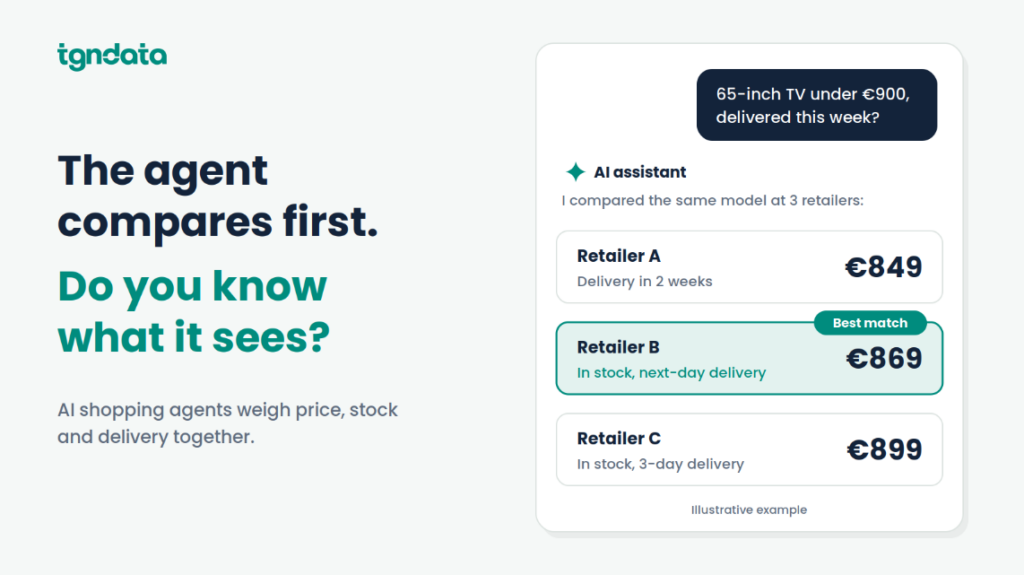
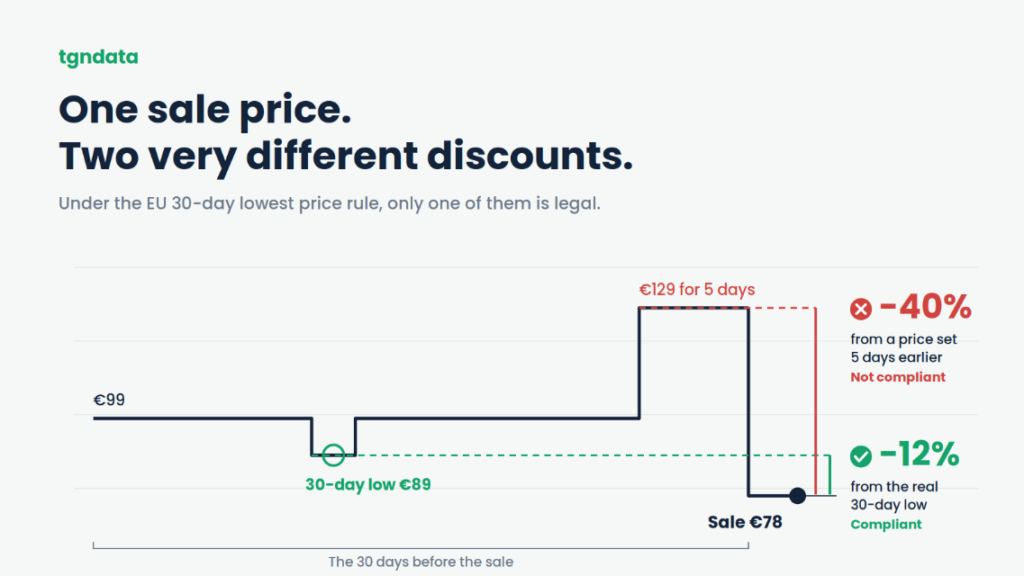
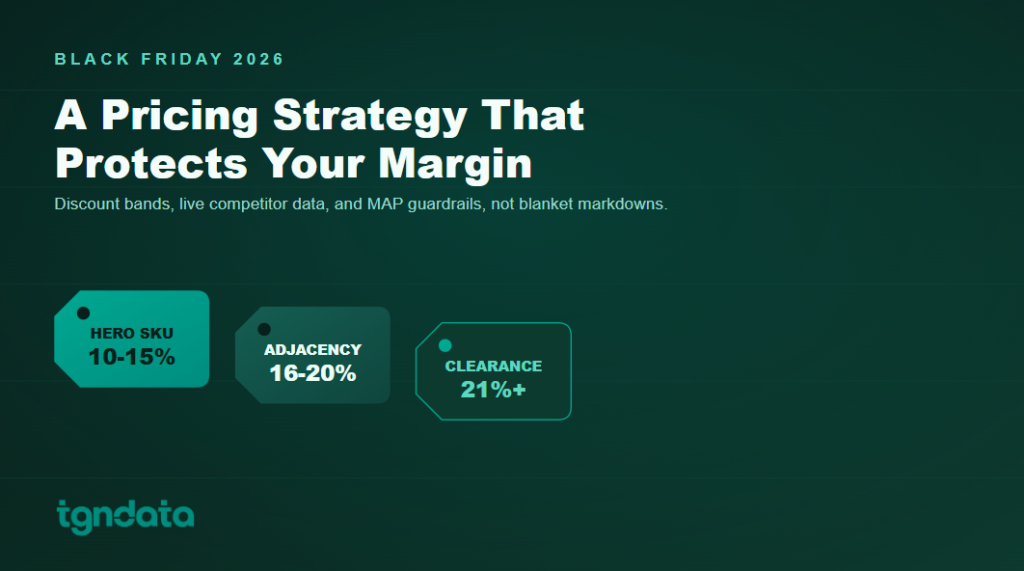
Promotions are one of the easiest places to lose margin. A business may discount when competitors are not discounting, or miss a promotion when competitors are gaining share.
Price intelligence helps answer:
This helps ecommerce teams avoid reactive discounting and build more profitable campaigns.
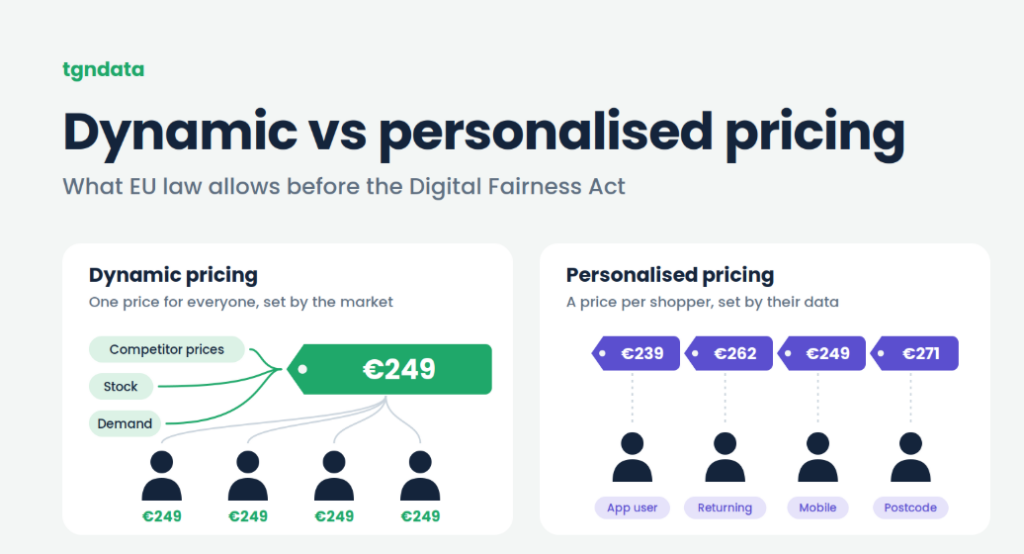
Dynamic pricing uses data and rules to adjust prices based on market conditions. tgndata is publicly listed as supporting dynamic pricing rules and competitive price tracking.
The ROI is strongest when a business has:
Dynamic pricing does not mean blindly changing prices. The real value comes from controlled automation: rules, thresholds, margin floors, competitor segmentation, and business logic.
A simple formula:
ROI = Financial gain from better pricing + labor savings + recovered revenue minus software and implementation cost
Key metrics to measure:
| ROI Driver | What to Measure |
|---|---|
| Margin improvement | Gross margin before vs. after pricing changes |
| Revenue lift | Sales from products repriced based on market data |
| Conversion impact | Conversion rate on price-sensitive SKUs |
| Labor savings | Hours saved on manual competitor tracking |
| Promotion efficiency | Margin retained during campaigns |
| Stock performance | Faster sell-through or reduced over-discounting |
Price intelligence is usually worth it when:
It is especially valuable for retailers and brands that need real-time competitive visibility across multiple competitors, sellers, or marketplaces.
Price intelligence may be less urgent if:
The software creates value only when the business uses the data to make better decisions.
The real ROI question is not only “How much does price intelligence cost?”
It is:
For e-commerce businesses with competitive categories, price intelligence is often not just a reporting tool. It becomes part of the revenue operating system.
Price intelligence is the process of collecting and analyzing competitor pricing, promotions, stock availability, and market trends to make better pricing decisions.
Price intelligence improves ROI by helping businesses protect margins, recover lost sales, reduce manual pricing work, and make faster, data-driven pricing decisions.
Ecommerce retailers, brands, distributors, and marketplace sellers with large or competitive product catalogs benefit most from price intelligence software.
Yes. Price intelligence helps businesses identify where prices can remain higher, avoid unnecessary discounting, and optimize promotions to improve overall profitability.
No. Small and mid-sized ecommerce businesses can also benefit from price intelligence, especially in competitive markets where pricing changes frequently.
Price intelligence delivers the strongest ROI when businesses use it to improve pricing decisions consistently, not just monitor competitors occasionally. For e-commerce retailers and brands, the value usually comes from protecting margins, reacting faster to market changes, reducing manual work, and making promotions more profitable.
The bigger and more competitive the catalog, the more expensive poor pricing decisions become. Businesses that rely on spreadsheets or delayed market data often lose margin without realizing it. In contrast, companies with real-time pricing visibility can make faster, more confident decisions across products, categories, and marketplaces.
Price intelligence is not only about lowering prices. It is about understanding the market well enough to price strategically.
For teams managing competitive ecommerce environments, the question is rarely whether pricing data matters. The real question is whether the business can afford to operate without it.
We use cookies to provide you with an optimal experience, for marketing and statistical purposes only with your consent, which you may revoke at any time. Please refer to our Privacy Policy for more information.










Missing an important marketplace?
Send us your request to add it!