Ecommerce Price Monitoring: The Complete Guide for 2026

Ecommerce price monitoring is the process of tracking competitor prices, availability, and promotions across online channels in real time. In today’s hyper-competitive ecommerce landscape, where prices change constantly and competitors use automated repricing, having accurate price intelligence is essential to stay competitive and protect your margins.
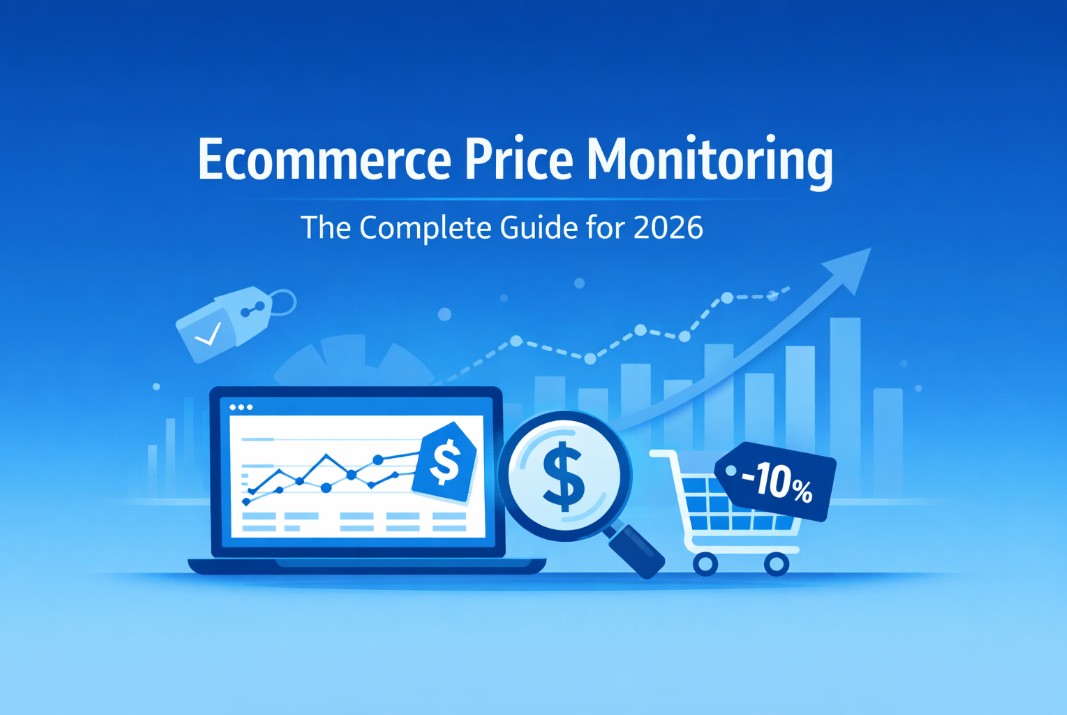
Ecommerce price monitoring dashboard with competitor pricing trends and dynamic pricing insights

What Is Ecommerce Price Monitoring?

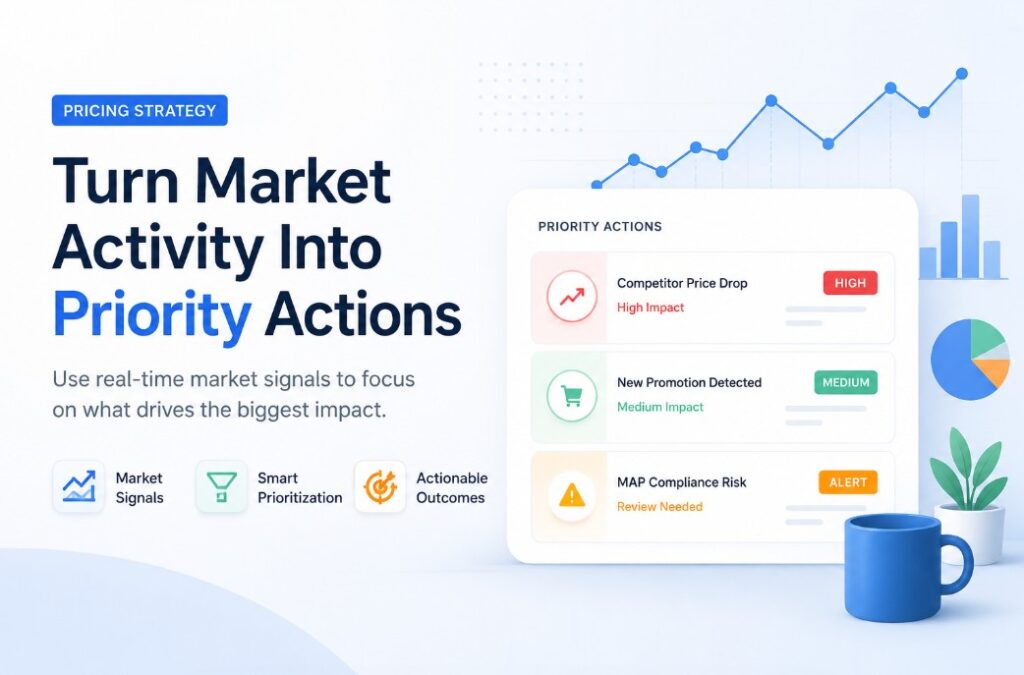
Ecommerce price monitoring is the process of tracking competitors’ product prices, availability, and promotions across online channels in real time.

It typically includes:

  • competitor price tracking across websites and marketplaces
  • SKU-level product matching
  • historical price tracking
  • stock and availability monitoring
  • promotion and discount detection

Modern platforms go beyond tracking. They turn raw data into pricing decisions.

Solutions like tgndata combine:

  • real-time price intelligence,
  • automated product matching,
  • dynamic pricing rules,
  • and market-wide analytics to support pricing strategy at scale

Why Price Monitoring Matters More in 2026

1. Price Transparency Is Absolute

Consumers compare prices instantly across:

  • Google Shopping
  • Amazon
  • marketplaces
  • price comparison engines

If you are not competitive, you are invisible.

2. Pricing Directly Impacts Conversion

Small price differences can determine:

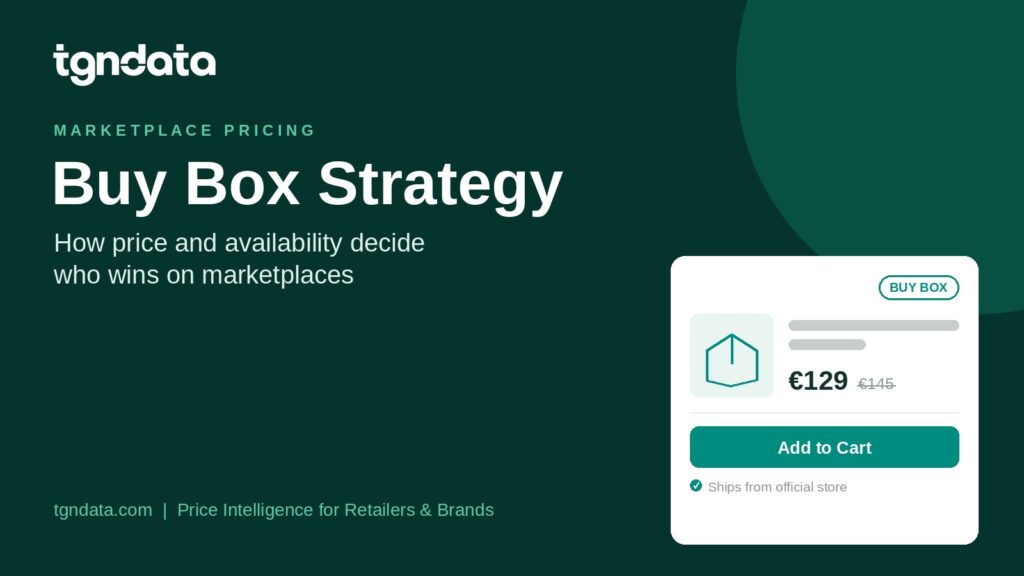
  • buy box ownership
  • conversion rate
  • cart abandonment

Without monitoring, you are pricing blind.

3. Competition Is Algorithmic

Your competitors are not pricing manually anymore.

They use:

  • dynamic pricing engines
  • automated repricing rules
  • real-time competitor signals

To compete, you need the same level of automation.

4. Margins Are Under Pressure

Inflation, ad costs, and marketplace fees reduce margins.

Price monitoring allows you to:

  • avoid unnecessary price cuts
  • identify pricing gaps
  • protect profitability

How Ecommerce Price Monitoring Works

Step 1: Data Collection

The system collects data from:

  • competitor websites
  • marketplaces (Amazon, Google Shopping, etc.)
  • reseller networks

Advanced tools automate this fully using:

  • scraping infrastructure
  • APIs
  • proprietary data pipelines

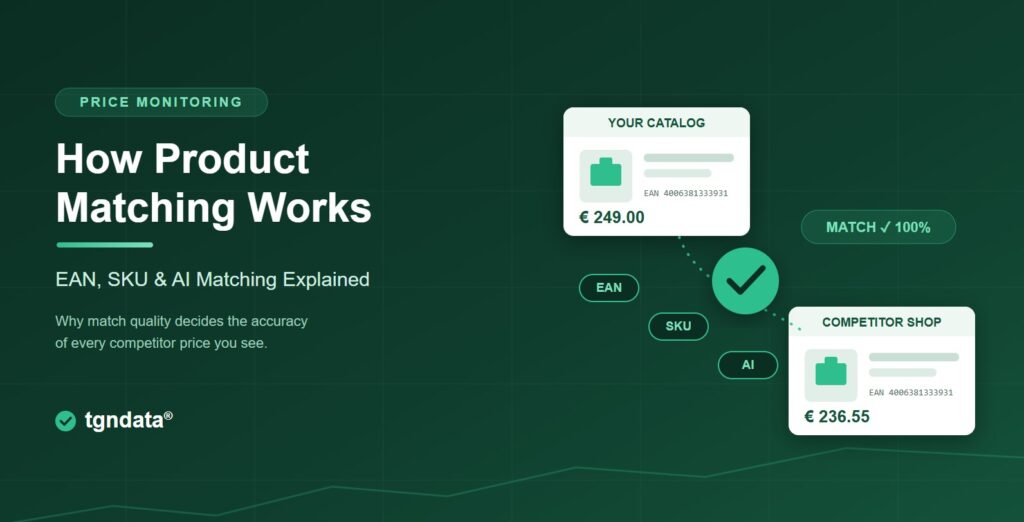
Step 2: Product Matching

One of the hardest problems.

The system must match:

  • your SKU → competitor SKU

Modern platforms use:

  • AI-based matching
  • attribute comparison
  • GTIN / EAN recognition

tgndata, for example, automates this process to eliminate manual matching and ensure high accuracy

Step 3: Data Processing

Raw data becomes structured insights:

  • price comparisons
  • price index vs competitors
  • cheapest seller detection
  • historical trends

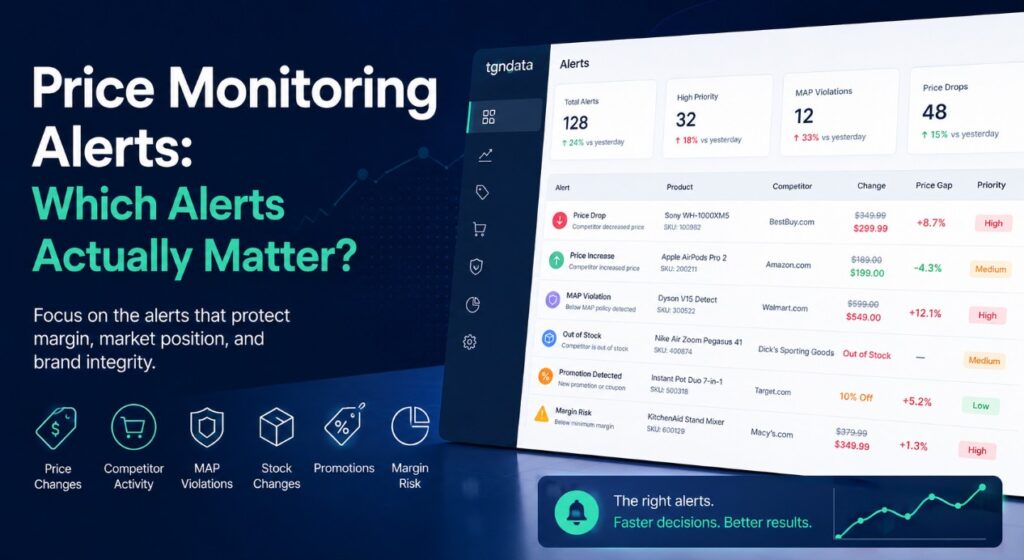
Step 4: Alerts and Monitoring

Users receive:

  • price change alerts
  • stock availability changes
  • MAP violations
  • competitor promotions

Step 5: Action (Where Most Companies Fail)

This is the gap.

Many companies stop at dashboards.

Advanced teams:

  • automate pricing decisions
  • apply pricing rules
  • trigger repricing workflows

This is where price monitoring becomes price optimization.

Key Use Cases (With Real Business Impact)

1. Competitive Pricing for Retailers

Retailers use price monitoring to:

  • stay competitive without over-discounting
  • win the buy box
  • adjust prices based on competitor moves

Example:
Instead of always being the cheapest, you:

  • match key competitors
  • maintain margin where possible

2. Dynamic Pricing Automation

Price monitoring feeds dynamic pricing systems.

Rules can include:

  • “stay 2% below competitor X”
  • “match lowest price if margin > 15%”
  • “increase price when competitors are out of stock”

Platforms like tgndata enable rule-based repricing at scale

3. MAP & MSRP Monitoring for Brands

Brands track:

  • unauthorized discounting
  • reseller price violations

This protects:

  • brand value
  • channel relationships

4. Assortment & Category Intelligence

Price monitoring also reveals:

  • competitor assortment gaps
  • pricing trends by category
  • product positioning opportunities

5. Promotion Monitoring

Track:

  • discounts
  • bundles
  • seasonal campaigns

Then respond faster than competitors.

What Data You Should Actually Track

Most companies track too little or too much.

Focus on:

Core Data

  • competitor price per SKU
  • availability / stock status
  • seller identity

Strategic Data

  • historical price trends
  • price index vs competitors
  • promotion frequency

Advanced Data

  • shipping costs
  • marketplace rankings
  • competitor assortment breadth

Common Mistakes in Price Monitoring

1. Treating It as Reporting Only

If you are not acting on the data, you are wasting it.

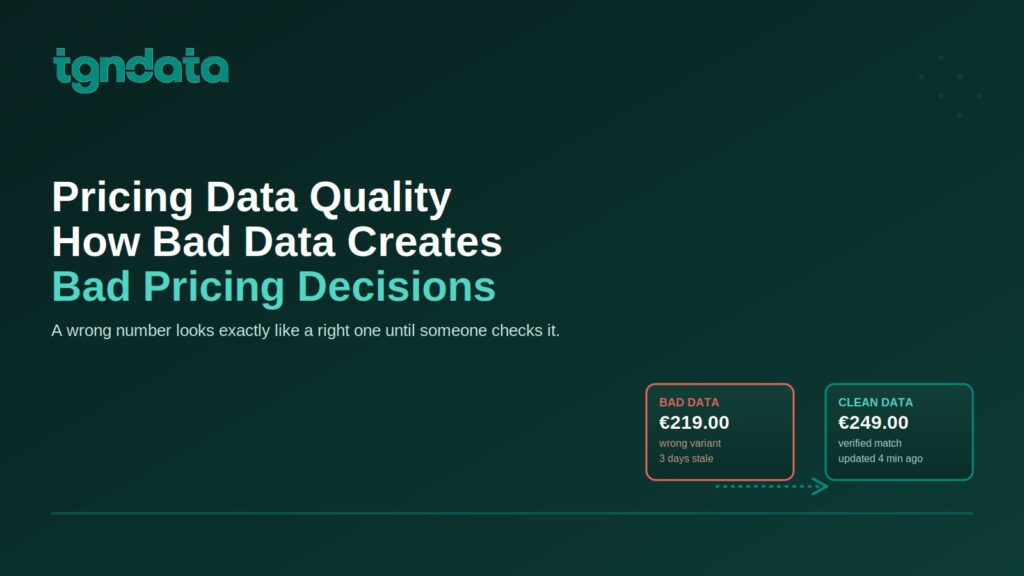
2. Poor Product Matching

Bad matching = bad decisions.

Accuracy matters more than volume.

3. Monitoring the Wrong Competitors

Not all competitors matter equally.

Focus on:

  • price leaders
  • marketplace sellers
  • direct substitutes

4. Ignoring Profit Margins

Revenue without margin is not growth.

5. Manual Workflows

Spreadsheets cannot compete with automated pricing environments.

How to Choose a Price Monitoring Solution

1. Data Accuracy

Look for:

  • high match accuracy
  • real-time updates
  • reliable data pipelines

tgndata, for example, emphasizes 99%+ data accuracy and real-time monitoring at scale

2. Automation Capabilities

Do not stop at tracking.

You need:

  • dynamic pricing rules
  • automated repricing
  • API integrations

3. Coverage

Ensure it covers:

  • your key markets
  • marketplaces
  • competitor websites

4. Scalability

Can it handle:

  • 1,000 SKUs?
  • 100,000 SKUs?

tgndata supports scaling from hundreds to hundreds of thousands of SKUs

5. Use Case Fit

Different buyers need different capabilities:

  • Retailers → competitive pricing + automation
  • Brands → MAP monitoring + reseller tracking
  • Marketplaces → large-scale price intelligence

Ecommerce Price Monitoring vs Dynamic Pricing

These are not the same.

Price Monitoring = Data
Dynamic Pricing = Action

You need both.

Without monitoring:

  • your pricing is blind

Without dynamic pricing:

  • your insights are unused

Trends Shaping Price Monitoring in 2026

1. AI-Driven Pricing Decisions

Not just rules, but predictive pricing:

  • demand-based adjustments
  • competitor reaction modeling

2. Real-Time Everything

Daily updates are no longer enough.

Leading companies operate on:

  • hourly or real-time updates

3. Full Market Visibility

Beyond price:

  • stock
  • shipping
  • promotions
  • assortment

4. Integration Into Revenue Systems

Price monitoring is becoming part of:

  • revenue management
  • growth strategy
  • profitability optimization

How to Get Started (Practical Framework)

Step 1: Define Your Pricing Strategy

  • margin-first vs growth-first
  • competitive positioning

Step 2: Identify Key Competitors

  • direct
  • marketplace
  • substitute products

Step 3: Select a Tool

Prioritize:

  • accuracy
  • automation
  • scalability

Step 4: Start With Visibility

  • dashboards
  • alerts
  • price benchmarking

Step 5: Move to Automation

  • pricing rules
  • repricing workflows
  • integration with your ecommerce stack

Frequently Asked Questions

What is ecommerce price monitoring software?

It is a tool that tracks competitor prices, availability, and promotions across online channels and provides actionable pricing insights.

In competitive markets, real-time or near real-time monitoring is now the standard.

Yes, when done using compliant data collection methods and publicly available information.

Monitoring collects data. Repricing uses that data to automatically update prices.

Final Takeaway

Ecommerce price monitoring is no longer about “checking competitors.”

It is about:

  • controlling your pricing position,
  • protecting your margins,
  • and reacting faster than the market.

Companies that win in 2026 are not the cheapest.

They are the most informed and the fastest to act.
Table of Contents

Most Recent Articles

Increase Revenue with Smarter, Real-Time Pricing

Track competitors, optimize pricing decisions, and protect your margins all in one platform.

Make faster pricing decisions and stay competitive without manual work.

Monitor any major Sales Channel
in any country !

Missing an important marketplace?
Send us your request to add it!